
-
Filter ClothBelt press filter mesh belt Horizontal belt vacuum filter mesh belt Vertical filter press filter cloth Filter Press Filter Cloth Breathable mesh Technical fabric - drying Technical fabric - high pressure belt Technical fabric - conveyor belt Technical fabric - fiberboard Joint form Edge banding form Accessories (threading)
Search HistoryClear All Records
- All
- Product Management
- News
Industrial Filter Cloth in Salt Brine Purification: Efficient Removal of Calcium Carbonate and Calcium Sulfate
Release time:
2025-05-16
The crucial role of industrial filter cloths and filter screens in brine purification in the salt industry
—— Process practice of high-efficiency removal of calcium carbonate and calcium sulfate by horizontal vacuum belt filter
I. Introduction: From brine to salt, purification is the first step
Salt is one of the oldest chemical products of mankind and an important pillar of the national basic industry. In modern industrialized salt production, the raw brine often contains various soluble and insoluble impurities, especially calcium carbonate ( CaCO ₃ ), calcium sulfate ( CaSO ₄ ) and other precipitable inorganic salts. If these impurities are not sufficiently removed in the pretreatment stage, it will not only affect the purity of the finished salt, but also may cause scaling and blockage of the downstream evaporation and crystallization equipment, resulting in operational risks.
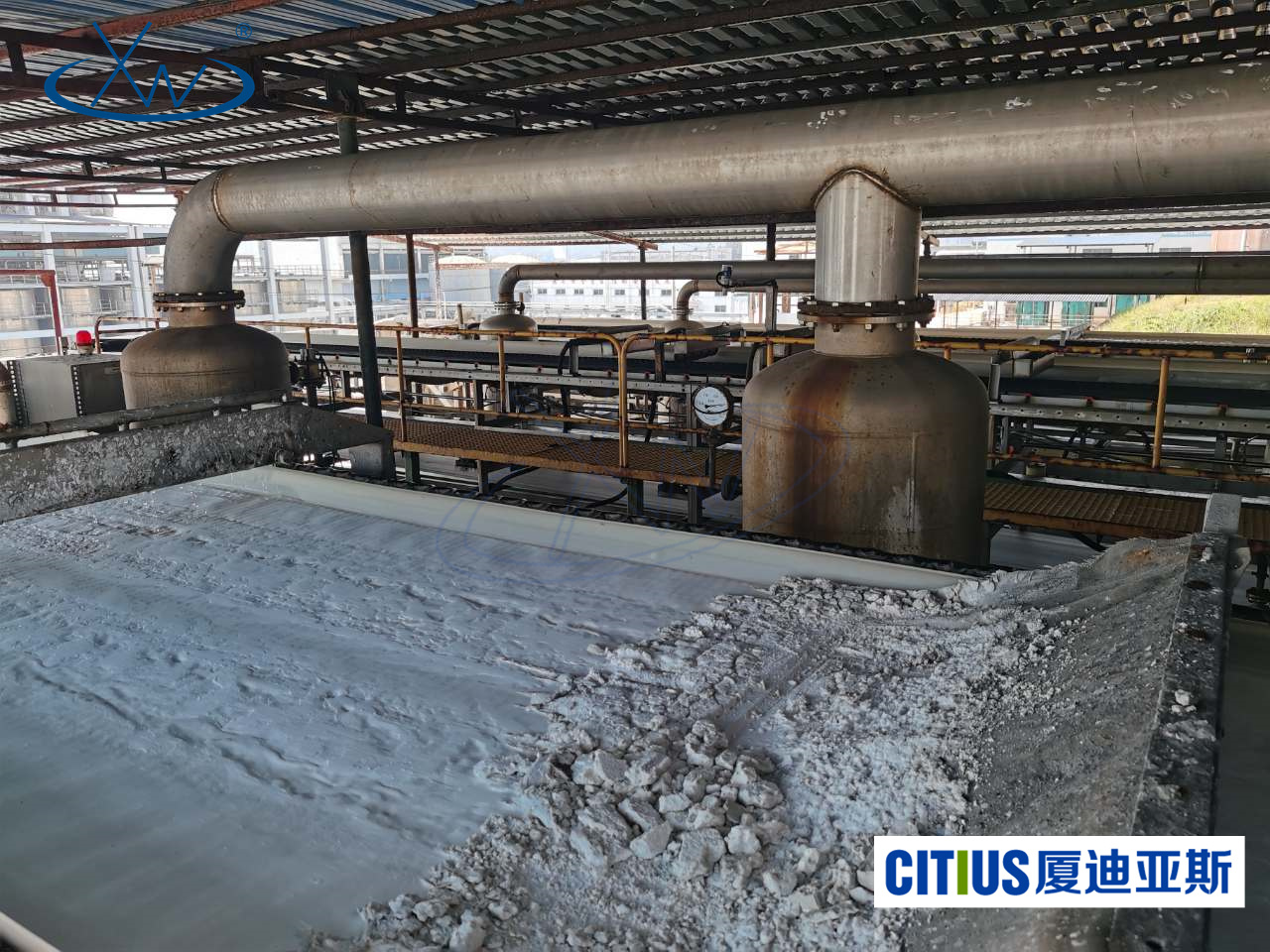
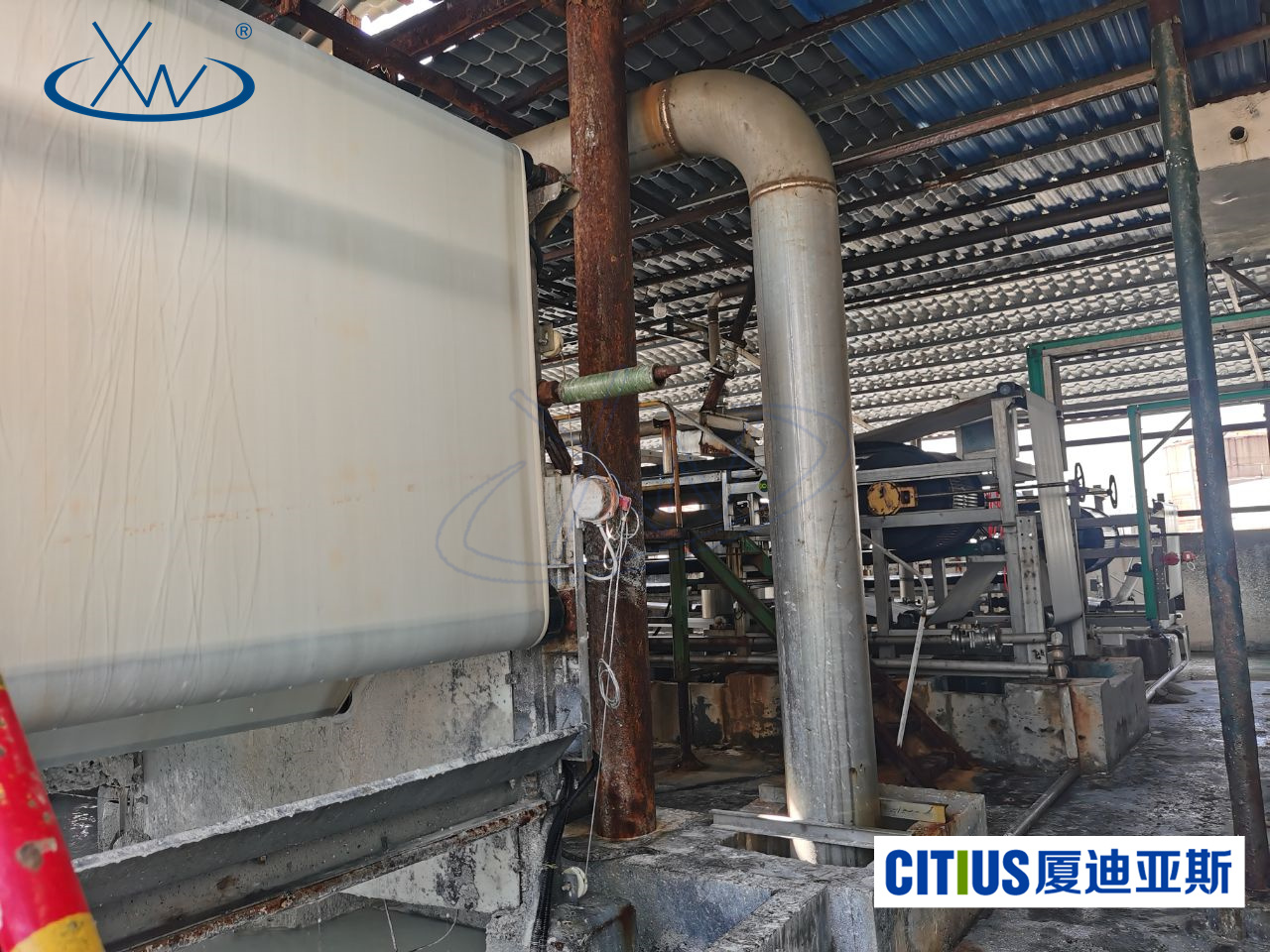
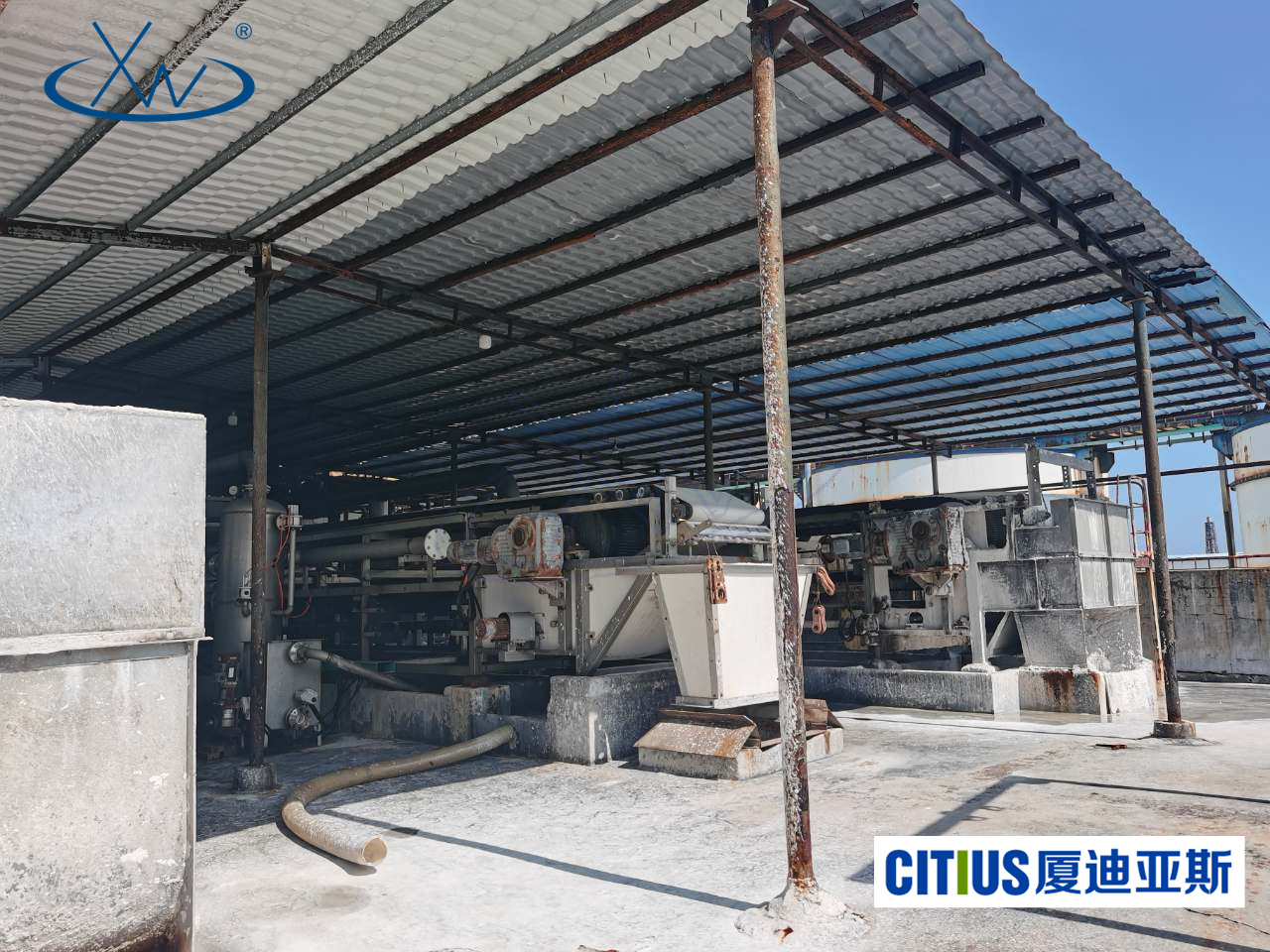
In such brine purification scenarios, horizontal vacuum belt filter ( Horizontal Vacuum Belt Filter, HVBF ) has become the mainstream process equipment due to its large processing capacity, high separation efficiency, and continuous operation. However, whether the equipment can operate stably and achieve efficient filtration depends on the industrial filter cloth and filter belt system. This article will focus on this core component, analyzing its structural principle, selection points, operational advantages, and successful applications in actual salt industry projects.
II. Pain points and filtration needs of brine purification
1. Complex and high impurity content
In natural brine or industrial byproduct brine, in addition to dissolved salts (such as NaCl 、 KCl 、 MgCl ₂ etc.), there are also a large number of insoluble impurities, especially the precipitated calcium carbonate and calcium sulfate after lime milk alkalization. It is easy to scale, settles slowly, and is difficult to clarify.
2. High requirements for process continuity
Modern salt plants use automated continuous production, which puts higher demands on the operational stability, filter cloth life, and maintenance frequency of the purification equipment. Traditional intermittent processes such as plate and frame presses have been gradually eliminated due to their low efficiency and high labor intensity.
3. High requirements for filtrate clarity
Brine purification is not only solid-liquid separation, but also involves the recycling of mother liquor and water conservation and environmental protection goals. Therefore, it requires high light transmittance, low turbidity, and no fine particulate impurities in the filtrate to avoid affecting the subsequent evaporation and crystallization process.
III. Overview of the working principle of horizontal vacuum belt filter
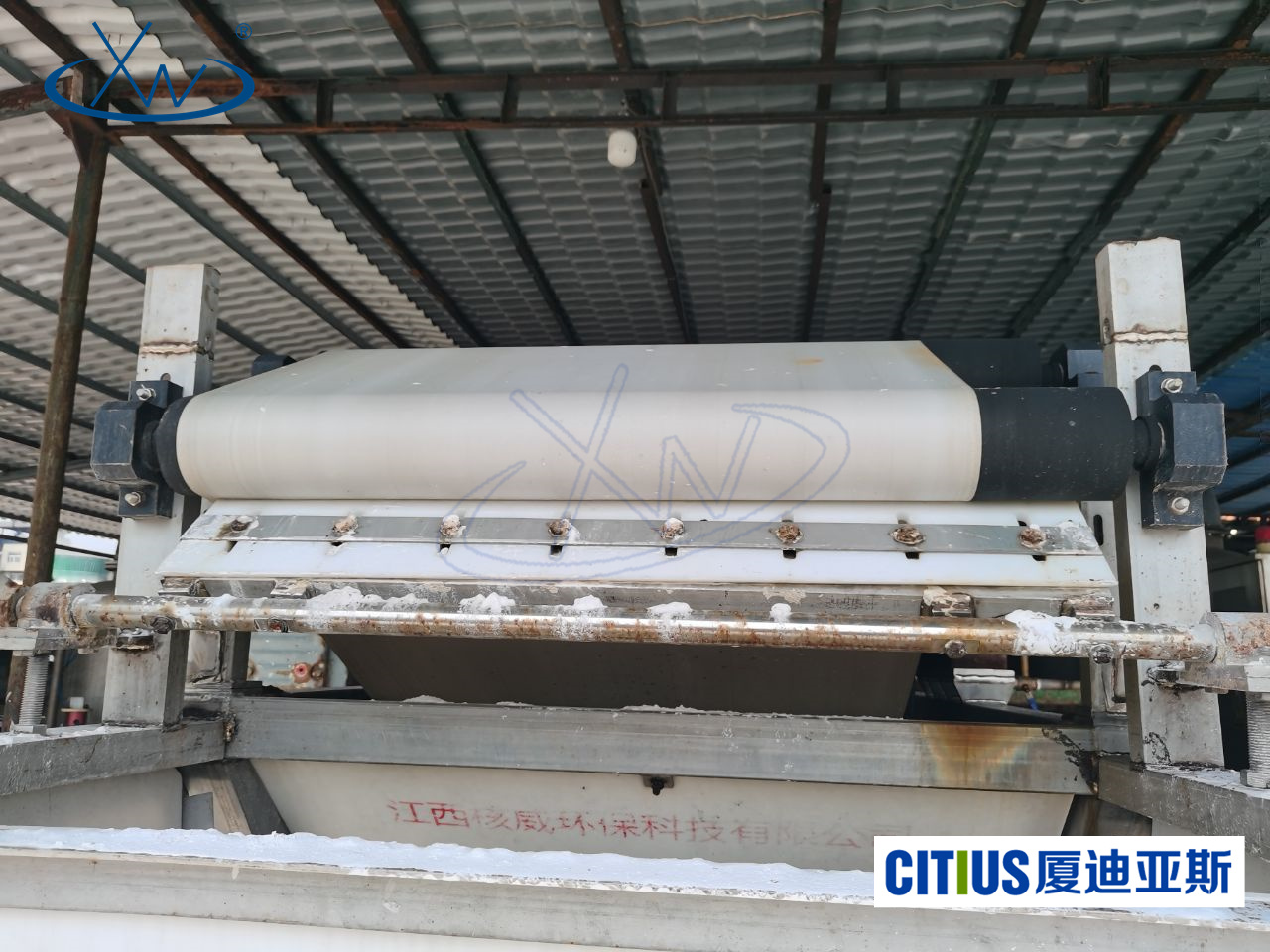
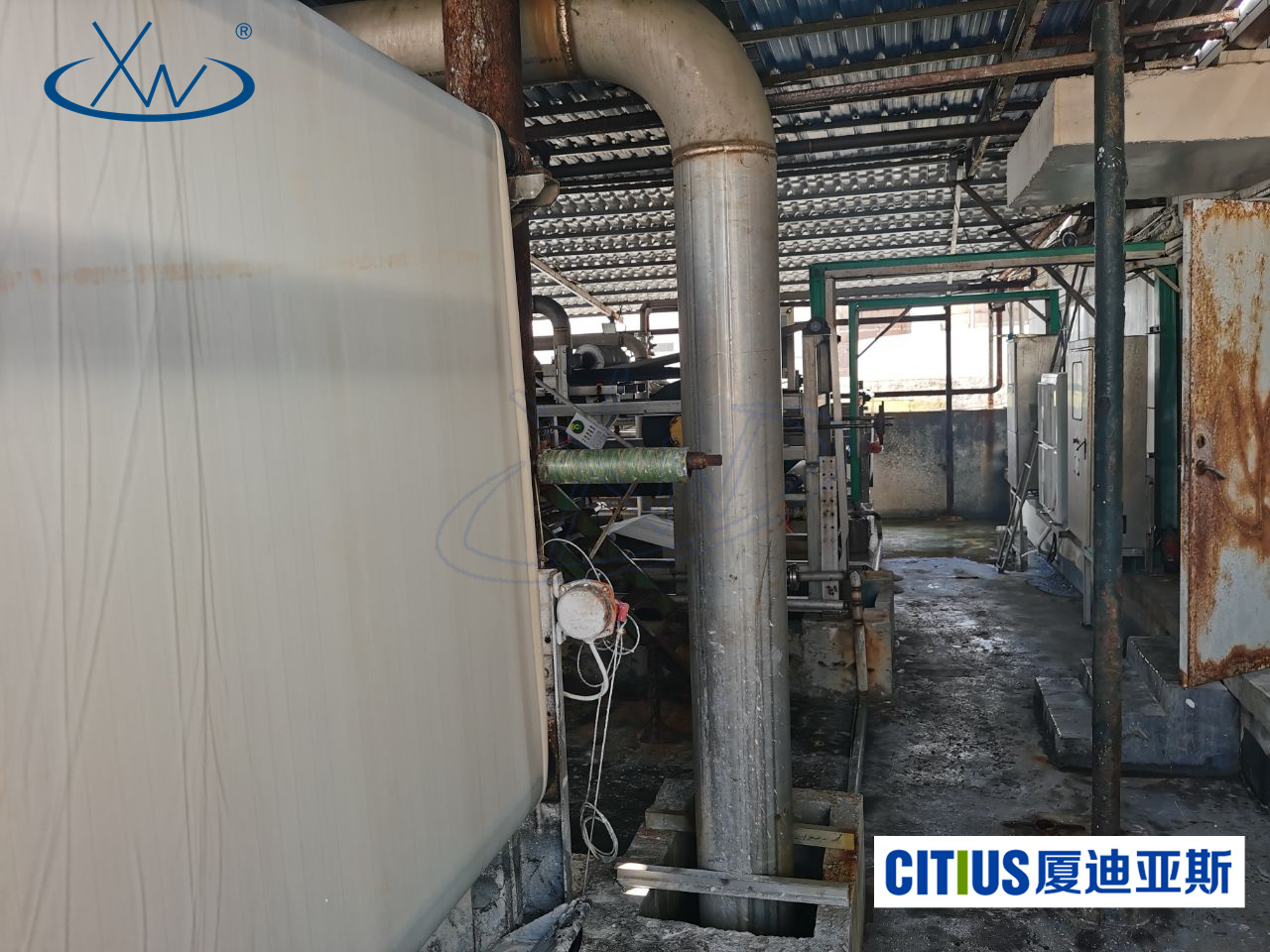
A horizontal vacuum belt filter is a continuous negative pressure suction solid-liquid separation equipment. Its basic components include:
- Continuously moving filter cloth : Carries the formation, washing, and removal of filter cake;
- Vacuum box and distribution system : Forms a stable negative pressure under the filter cloth to draw away the filtrate;
- Filter cloth support belt : Provides mechanical strength and drainage channels;
- Filtrate collection system : Collects mother liquor and washing liquid in stages;
- Filter cake peeling and cloth surface cleaning system : Ensures the regeneration and reuse of the filter cloth.
The entire filtration process proceeds smoothly on the surface of the filter cloth, slurry spreading → Vacuum dehydration → Filter cake washing → Filter cake discharge → Filter cloth cleaning, forming an integrated continuous process, especially suitable for high-concentration, low-particle-size slurry treatment such as brine purification.
IV. The core role and key parameters of industrial filter cloth and filter screen
In HVBF ,the filter cloth is not only a platform for carrying the filter cake, but also directly determines the filtration accuracy, dehydration efficiency, and operational stability.
1. Performance requirements of industrial filter cloth
( 1 )Filtration accuracy and air permeability
In order to effectively retain fine calcium carbonate and calcium sulfate particles, the filter cloth needs to have a micron-level pore size distribution. Monofilament / composite multi-layer woven structure is usually selected, which combines strength and separation efficiency. At the same time, the fabric needs to have appropriate air permeability to avoid the formation of " airlock ” " affecting the filtrate flow rate.
( 2 )Peeling performance and surface treatment
Calcium carbonate crystals are easy to cake on the cloth surface. If the surface of the filter cloth is rough or the pore structure is unreasonable, the filter cake is difficult to remove, which will lead to an increase in operating resistance. Xiamen Citius (Xiamen Citius) uses smooth surface finishing technology and anti-scaling coating technology to significantly improve the filter cake peeling rate.
( 3 )Resistance to chemical corrosion and mechanical tension
Brine contains Mg² ⁺ 、 Cl ⁻ ions. The filter cloth must be resistant to salt corrosion, especially maintaining dimensional stability and preventing hydrolysis under high-temperature alkaline conditions. Simultaneously, due to the continuous tensioned operation of the filter cloth, tensile strength and low relaxation rate are crucial.
2. Structure and Function of the Supporting Filter Belt
As the " framework ” below the filter cloth, the main function of the belt is to provide the necessary support and drainage channels for the filter cloth:
- High-strength belts are used as materials balancing rigidity and flexibility;
- Optimized porosity design ensures smooth filtrate flow ;
- Edge heat sealing prevents side leakage and deviation ;
- Anti-twist design adapts to long-distance continuous operation 。
Citius (Xiamen Citius) Through collaborative development with filter equipment manufacturers, we ensure the composite matching of filter cloth and belt, achieving uniform cloth tension and maximizing filtration efficiency.
V. Citius (Xiamen Citius) Engineering Application Practices in Brine Purification
In the domestic and international salt industry, Citius (Xiamen Citius) filter cloths have been widely used in brine purification workshops, pre-treatment processes, and crystallization mother liquor purification systems. Typical customers include coastal salt chemical groups, inland brine comprehensive utilization projects, and chlor-alkali co-production salt plants.
Successful Case: Brine Purification System of a Large Salt Plant in North China
Operating Parameters:
- Brine treatment capacity: 150 m³/h
- Types of impurities: CaCO ₃ 、 CaSO ₄ and a small amount of Fe(OH) ₃
- Slurry concentration: approximately 12%
- Target filtrate turbidity: <20 NTU
- Filter cloth replacement cycle: >3000 hours
Citius (Xiamen Citius) Solution:
- A high-density double-layer filter cloth is used, with a pore size controlled at 10~15μm ;
- Surface anti-scaling coating, improving the stripping rate to 95% or more;
- Combined with an optimized drainage support belt to improve overall operational stability;
- Air permeability grade is matched according to customer vacuum system parameters ( 300-500 L/m²/s );
Usage effect:
- Stable filtrate clarity, impurity removal rate of 98% or more;
- Filter cake moisture content controlled at 45~50% facilitating subsequent transportation and recovery;
- No obvious blockage or scaling on the cloth surface, cloth life increased by 30% or more;
- Significant reduction in equipment downtime, saving maintenance costs.
VI. Future Development Trends and Conclusion
Salt enterprises are accelerating their transformation towards green, clean, and efficient operations. Brine purification, as a source link, its filtration system efficiency and operational stability directly affect overall energy consumption and economic benefits. Improvements in industrial filter cloth performance and customization capabilities will become key to system optimization.
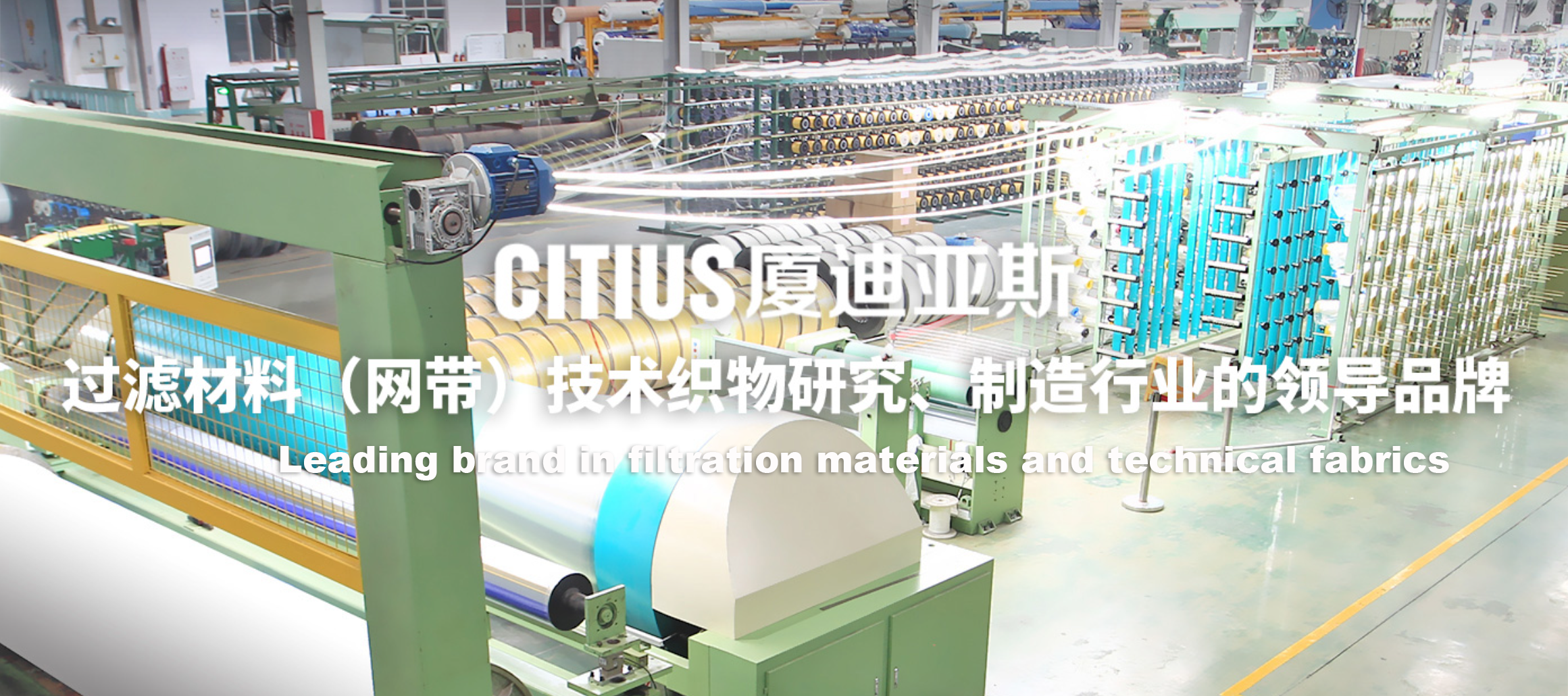
Xiamen Citius (Xiamen Citius) Filter Materials Technology Co., Ltd., as a leading brand in China's filter materials and technical textiles field, relies on independent R&D capabilities, advanced weaving equipment, and 30 years of industry experience, is committed to providing more performance-advantageous and cost-effective filtration solutions for the salt and related industries.
** In every detail of brine purification, we hide our persistent exploration of clean technology. ** In the future, Citius (Xiamen Citius) will continue to use technological innovation and service as its engine to provide more reliable, efficient, and environmentally friendly filtration support for the global salt and water treatment industries.

Add
No. 16-22 Chunfeng East Road, Xiang'an Torch High tech Zone, Xiamen City, Fujian Province, ChinaAll Rights Reserved. | Privacy Policy |
Tel/ WhatsApp