
-
Filter ClothBelt press filter mesh belt Horizontal belt vacuum filter mesh belt Vertical filter press filter cloth Filter Press Filter Cloth Breathable mesh Technical fabric - drying Technical fabric - high pressure belt Technical fabric - conveyor belt Technical fabric - fiberboard Joint form Edge banding form Accessories (threading)
Search HistoryClear All Records
- All
- Product Management
- News
Citius filter cloth | Innovative application of filter cloth in the extraction of new energy lithium resources
Release time:
2024-11-26
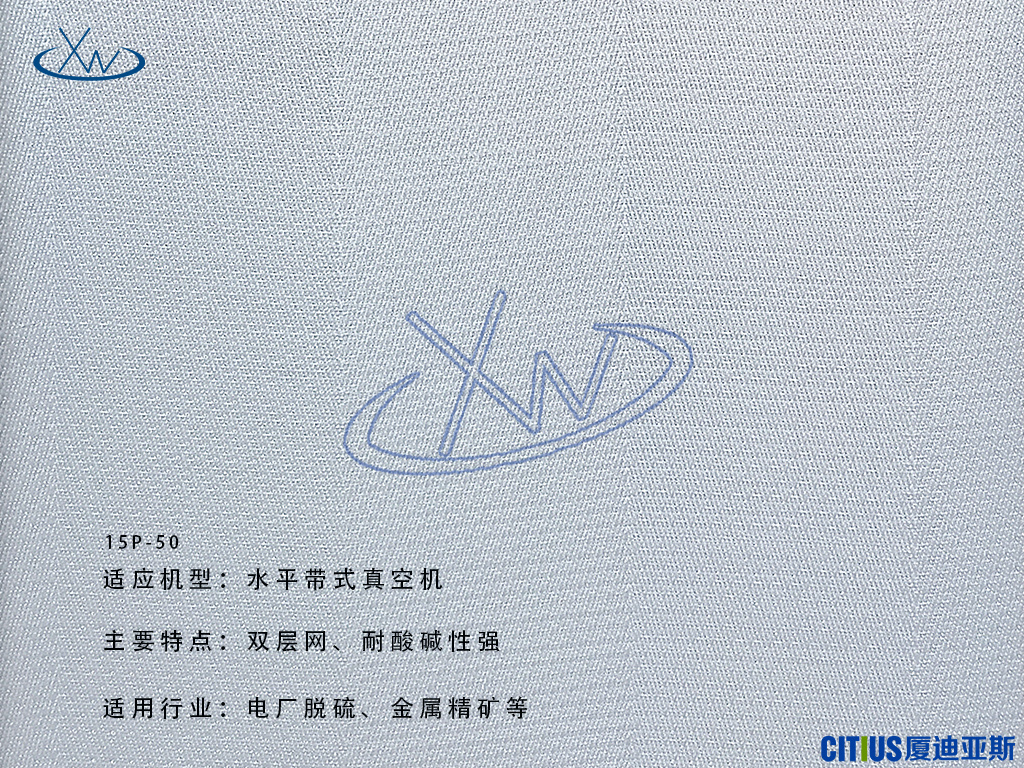
With the vigorous development of the new energy industry, the surge in lithium battery demand has driven the rapid expansion of the lithium carbonate industry. As a core raw material for lithium battery production, its preparation efficiency and quality are directly related to the sustainable development of the downstream industrial chain.Lithium carbonate leachingis one of the key links, and the solid-liquid separation efficiency in this link is significantly affected by the filtering equipment and filter cloth performance used. Xiamen Shadias Filter Material Technology Co., Ltd. (hereinafter referred to as "Shadias") developedthe 15P series filter cloths, which, with their excellent performance, have become an indispensable important role in the lithium carbonate leaching process.
What is lithium carbonate leaching?
Lithium carbonate leaching refers to the process of extracting lithium from lithium-containing minerals or salt lake brine and converting it into lithium carbonate through chemical or physical methods. This process involves various complex chemical reactions and physical separation techniques, making it a key link in lithium resource utilization.
Sources of lithium carbonate leaching
-
Hard rock ore lithium extraction
Spodumene and lepidolite are the main hard rock lithium ores. Through processes such as roasting, acid or alkali leaching, lithium elements are dissolved and separated from the ore. -
Salt lake brine lithium extraction
Salt lake brine contains abundant lithium ions, which can be extracted as usable lithium carbonate through steps such as concentration, precipitation, and filtration.
Process flow of lithium carbonate leaching
The lithium carbonate leaching process generally includes the following main steps:
-
Mineral roasting and dissolution
Spodumene or lepidolite ore needs to undergo high-temperature roasting to change its physical structure, followed by reaction with acid (such as sulfuric acid) or alkali (such as sodium carbonate) to form soluble lithium salts. -
Solid-liquid separation
The dissolved lithium liquid contains a large amount of solid impurities, which need to be separated from the lithium salt solution using a horizontal vacuum belt filter to ensure the purity of the filtrate. -
Lithium salt precipitation
Sodium carbonate or sodium bicarbonate is added to the lithium liquid, causing lithium ions to combine with carbonate ions to form precipitated lithium carbonate crystals. -
Washing and drying
The lithium carbonate crystals are further washed and dried to ultimately meet the quality requirements for industrial-grade or battery-grade lithium carbonate.
Significance of lithium carbonate leaching
The lithium carbonate leaching process is not only the core of lithium resource extraction but also directly affects the cost and efficiency of downstream battery manufacturing. An efficient lithium carbonate leaching process can significantly improve the utilization rate of lithium resources, reduce energy consumption and environmental pollution, making it an important link for achieving sustainable development in the new energy industry.
Role of Shadias' 15P series filter cloths in lithium carbonate leaching
Shadias' 15P series filter cloths are specially developed for the new energy industry and are particularly suitable forhorizontal vacuum belt filtersto handle lithium carbonate leachate. Their excellent performance provides important support for improving the efficiency and product quality of the lithium carbonate leaching process.
Performance advantages
-
Efficient solid-liquid separation
-
The filter cloth has a uniform pore size distribution, allowing for rapid separation of lithium liquid from solid impurities, ensuring clear filtrate.
-
A special surface coating reduces particle clogging phenomena, improving filtration flux and separation accuracy.
-
-
Strong corrosion resistance
-
The lithium leachate contains acidic or alkaline substances; the 15P series filter cloths have excellent chemical stability and can be used for a long time in complex environments.
-
-
Excellent dewatering performance
-
The design of the filter cloth optimizes vacuum adsorption effects, resulting in low moisture content in the filter cake, which helps reduce subsequent drying costs.
-
-
High durability
-
The 15P series filter cloths are durable, with significantly reduced wear resistance that decreases the need for frequent replacements.
-
Practical application cases
In several new energy projects, Shadias' 15P series filter cloths have been widely used in the filtration stage of lithium carbonate leachate, demonstrating excellent performance:
-
Significant improvement in filtration efficiency
-
When processing high-concentration lithium liquid, filtration efficiency improved by about 15%-20% compared to traditional filter cloths.
-
-
Significant reduction in operating costs
-
(Filter cloth replacement frequency decreased, maintenance costs dropped by about 10%.
-
-
(Environmental friendliness)
-
(The high-efficiency separation capability of the filter cloth reduces residue accumulation and optimizes waste disposal processes.)
-
(Customer feedback indicates that the 15P series filter cloths not only enhance filtration efficiency and product purity but also greatly improve the stability of the lithium carbonate leaching process.)
(Conclusion and outlook)
(As a core link in the lithium extraction process, there are high-performance requirements for filter cloths. Shadias' 15P series filter cloths have become the best solution for solid-liquid separation in lithium carbonate leaching due to their excellent filtration performance, outstanding corrosion resistance, and long-lasting durability.)
(In the future, Shadias will continue to deepen its efforts in the new energy field, continuously innovate filter cloth technology, provide more efficient and environmentally friendly support for lithium carbonate production and the lithium battery industry chain, and contribute to sustainable development in the global new energy industry.)



Add
No. 16-22 Chunfeng East Road, Xiang'an Torch High tech Zone, Xiamen City, Fujian Province, ChinaAll Rights Reserved. | Privacy Policy |
Tel/ WhatsApp