
-
Filter ClothBelt press filter mesh belt Horizontal belt vacuum filter mesh belt Vertical filter press filter cloth Filter Press Filter Cloth Breathable mesh Technical fabric - drying Technical fabric - high pressure belt Technical fabric - conveyor belt Technical fabric - fiberboard Joint form Edge banding form Accessories (threading)
Search HistoryClear All Records
- All
- Product Management
- News
How does filter cloth selection impact municipal sludge treatment? Citiuss' answer
Release time:
2025-09-24
CITIUS Industrial Filter Cloth in Solid-Liquid Separation Practices for Municipal Sludge Treatment
—— The core material solution for belt press filter machines
Introduction
As urbanization continues to accelerate, municipal wastewater treatment plants have become critical infrastructure for safeguarding environmental safety and public health. The large volumes of sewage sludge generated during wastewater treatment are highly waterlogged and contain complex organic compounds. If not properly treated and reduced in volume, these sludges can easily lead to secondary pollution, driving up transportation and disposal costs. Solid-liquid separation technologies, especially Belt Press Filter Machine It has become the mainstream equipment in the municipal sludge dewatering process. As a critical operational component, the filter cloth directly determines the equipment's dewatering efficiency, cake solids content, operational stability, and long-term cost-effectiveness.
With over 30 years of experience in the research, development, and manufacturing of industrial filtration materials, Citiuss CITIUS has developed a comprehensive range of filter cloth solutions tailored for municipal sludge treatment. Through continuous optimization of filter cloth weaving techniques, surface treatments, and durability, Citiuss CITIUS industrial filter cloths have been widely adopted in wastewater plants both domestically and internationally, helping to achieve the goals of sludge reduction, resource recovery, and harmless disposal.
Challenges in Municipal Sludge Treatment
Municipal sewage sludge has a complex origin, encompassing both residential wastewater and some industrial effluents mixed in. Its key characteristics are:
- High water content : The moisture content of untreated raw sludge typically ranges from 95% to 99% Between them, it exists almost in a fluid state, making direct disposal difficult.
- The particle composition is complex. : The mixture of organic colloids, fibers, inorganic particles, and more makes it difficult to separate the mud from the water.
- Contains high levels of oils and surfactants : It easily forms an adhesive layer, reducing the permeability of the filter cloth and increasing operational resistance.
- Dehydration faces significant cost pressures. : Municipal sludge volumes are substantial; if not treated thoroughly, they will significantly increase transportation costs as well as the expenses associated with subsequent landfilling and incineration.
Therefore, the core objective of belt press filters in municipal sludge treatment is to Maintain continuous operational stability On the premise of maximizing sludge cake thickness while minimizing operational energy consumption and maintenance costs.
The synergistic effect of belt press filters and filter cloths
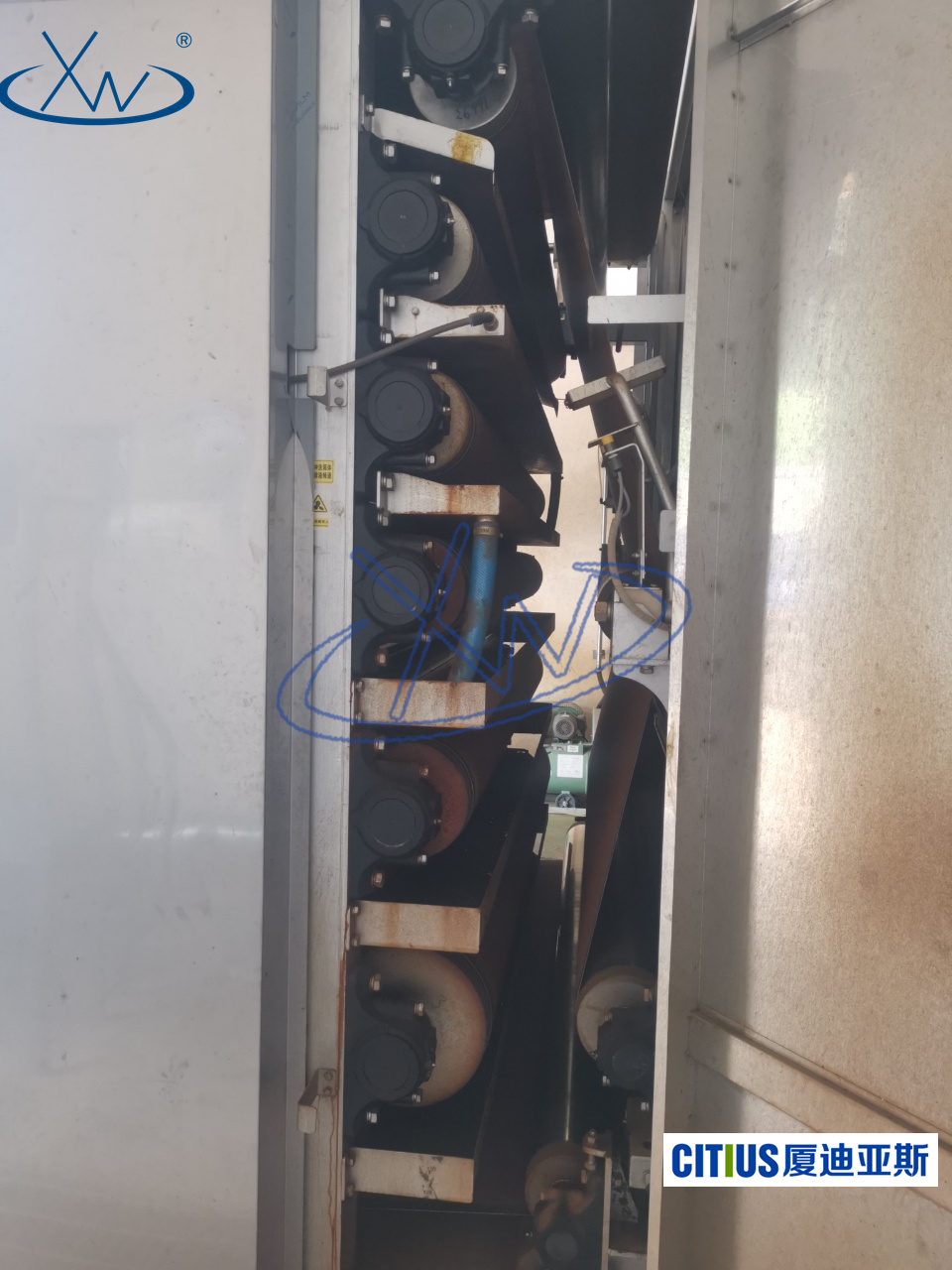
The belt press filter, renowned for its continuous operation, low energy consumption, and high degree of automation, is widely adopted in the municipal sludge dewatering field. Its general process flow includes:
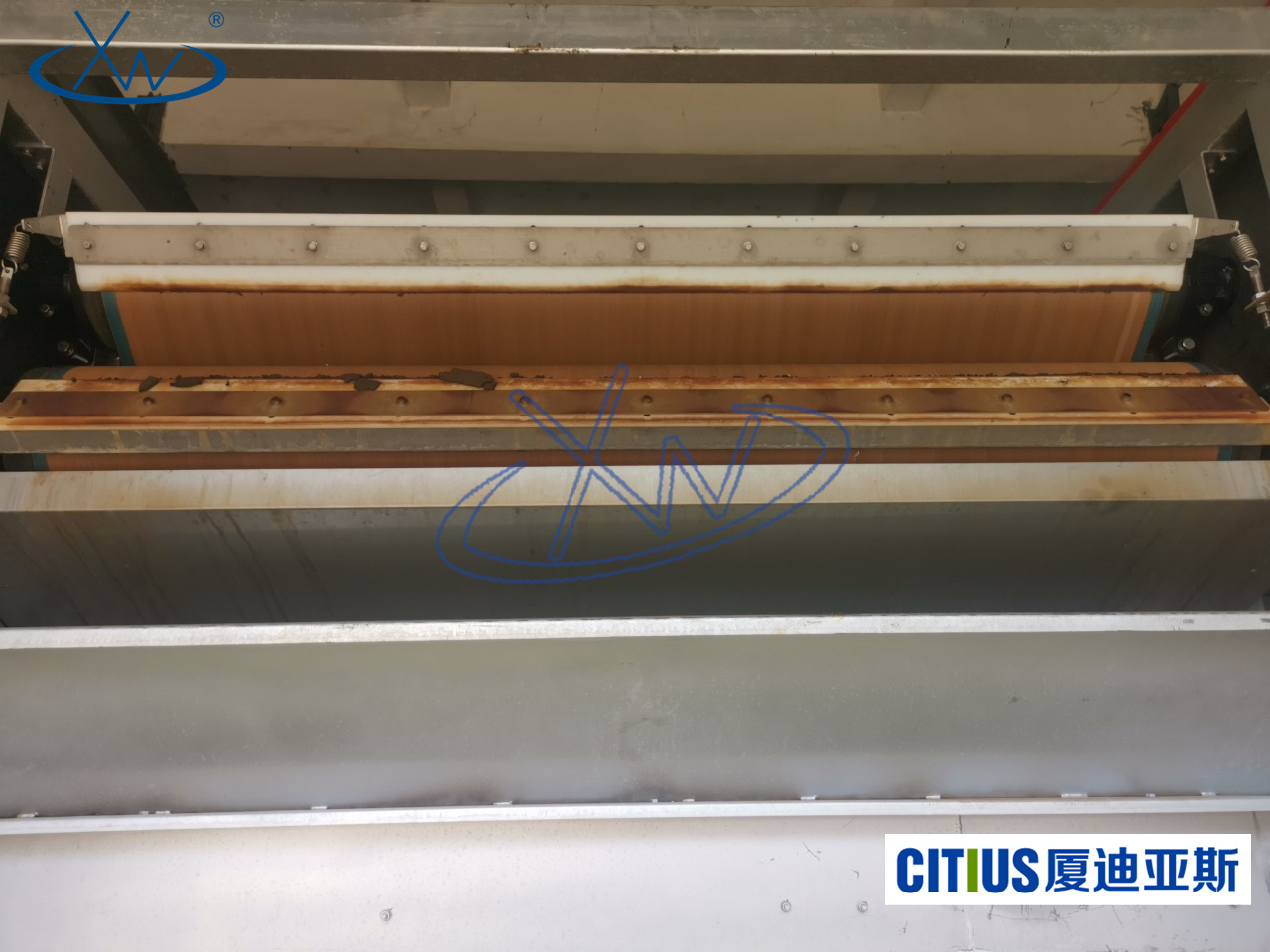
- Gravity Dewatering Section : The sludge spreads evenly on the filter cloth, draining naturally by gravity.
- Wedge-shaped Pre-compression Section : The filter cloths are gradually pressurized from top to bottom, allowing the sludge cake to take initial shape.
- Deep Pressing Stage : By alternately applying pressure through multiple compression rollers, the filter cake is maximized for compaction.
In this process, the filter cloth takes on the role of Carrying, permeability, interception, and stripping Fourfold function:
- Load-bearing : Requires sufficient strength to withstand mechanical tension and repeated bending.
- Water permeability : Ensure rapid water drainage while preventing particle loss.
- Retention property : Effectively retains fine suspended particles, enhancing the solids content of the filter cake.
- Delamination : The mud cake can detach smoothly, reducing the frequency of cleaning.
It is thus evident that the performance of the filter cloth directly determines the operational efficiency and economic viability of the belt press filter.
The Advantages of Citiuss CITIUS Industrial Filter Cloth
The application of Citiuss CITIUS industrial filter cloths in municipal sludge treatment offers the following outstanding advantages:
- High Strength and Durability
- Using specialized industrial fibers and advanced weaving techniques, the filter cloth boasts exceptional tensile strength and abrasion resistance. Even under continuous, high-intensity pressing, it maintains a stable shape, significantly extending its service life.
- Using specialized industrial fibers and advanced weaving techniques, the filter cloth boasts exceptional tensile strength and abrasion resistance. Even under continuous, high-intensity pressing, it maintains a stable shape, significantly extending its service life.
- Optimizing the Balance Between Permeability and Retention
- The filter cloth structure design focuses on pore size distribution and monofilament arrangement, ensuring both sufficient water permeability and effective retention of fine particles, ultimately forming a dense filter cake.
- The filter cloth structure design focuses on pore size distribution and monofilament arrangement, ensuring both sufficient water permeability and effective retention of fine particles, ultimately forming a dense filter cake.
- Excellent mud cake release properties
- Special surface treatment processes ensure a smooth, anti-clogging filter cloth surface, reducing sludge cake residue and minimizing the frequency of manual cleaning and water rinsing.
- Special surface treatment processes ensure a smooth, anti-clogging filter cloth surface, reducing sludge cake residue and minimizing the frequency of manual cleaning and water rinsing.
- Chemical resistance and anti-fouling properties
- Municipal sludge often contains acidic and alkaline substances, as well as surfactants. The CITIUS filter cloth from Citiuss boasts excellent chemical stability, ensuring its performance remains consistently robust over the long term.
- Municipal sludge often contains acidic and alkaline substances, as well as surfactants. The CITIUS filter cloth from Citiuss boasts excellent chemical stability, ensuring its performance remains consistently robust over the long term.
- Customized Solutions
- Depending on the sludge characteristics of different regions, Citiuss CITIUS offers differentiated filter cloth models, covering aspects such as thickness, pore size, and edge treatment, ensuring optimal compatibility with customers' equipment.
- Depending on the sludge characteristics of different regions, Citiuss CITIUS offers differentiated filter cloth models, covering aspects such as thickness, pore size, and edge treatment, ensuring optimal compatibility with customers' equipment.
Application Cases and Achievements
In practical applications at numerous municipal wastewater treatment plants both domestically and internationally, Citiuss CITIUS industrial filter cloths have demonstrated clear advantages. For example:
- A large coastal city's wastewater treatment plant, after replacing its original imported filter cloth with Xudias CITIUS filter cloth, The cake solids content increases by approximately 3 Percentage point , the filter cloth lifespan is extended by nearly double.
- At a winter-cold wastewater treatment plant in the north, Citiuss CITIUS filter cloths maintained stable permeability. Effectively reduce winter operational energy consumption , avoiding equipment downtime caused by filter cloth blockage.
- In a case study of a medium-sized wastewater treatment plant overseas, the custom filter cloths provided by Citiuss CITIUS helped reduce rinse water consumption. 20% Above, operating costs have significantly decreased.
These practical achievements demonstrate that high-quality filter cloths can deliver tangible energy savings, cost reductions, and enhanced efficiency throughout the entire sludge treatment process.
Market Trends and Future Outlook
The future development direction of the municipal sludge treatment industry will increasingly focus on the following aspects:
- Green and Low-Carbon : At “ Dual Carbon ” In the context of strategy, sludge reduction and energy recovery have become key priorities, and the efficient dewatering function of filter cloths will be further highlighted.
- Intelligent Operation With the advancement of IoT and big data applications, operational parameter monitoring and lifespan prediction for belt press filters and filter cloths will become智能化 (intelligent).
- Resource-based utilization : Recovering organic matter and nutrient elements from sludge requires more efficient front-end dewatering equipment, as the performance of filter cloths will directly determine the feasibility of subsequent resource recovery processes.
- Growing demand for internationalization As urbanization accelerates in developing countries, the market size for municipal sludge treatment continues to expand, driving even stronger demand for high-performance industrial filter cloths.
Citius CITIUS will continue to focus on R&D innovation, leveraging over three decades of industry experience to deliver more efficient, reliable, and environmentally friendly filter cloth solutions for municipal wastewater treatment.
Conclusion
In the field of municipal sludge treatment, filter cloths are not merely consumables—they are an integral part of belt press filtration machines. “ Heart ” CITIUS industrial filter cloths from Citiuss are helping an increasing number of wastewater treatment plants enhance sludge dewatering efficiency, reduce operational costs, and extend equipment lifespan—thanks to their exceptional features such as high strength, excellent water permeability, chemical resistance, and customizable options. Looking ahead, as the municipal sludge treatment market continues to demand more efficient solid-liquid separation solutions, Citiuss CITIUS will steadfastly leverage its leadership in the industrial filtration sector, driving the industry toward a greener, smarter, and more sustainable future.

Add
No. 16-22 Chunfeng East Road, Xiang'an Torch High tech Zone, Xiamen City, Fujian Province, ChinaAll Rights Reserved. | Privacy Policy |
Tel/ WhatsApp