
-
Filter ClothBelt press filter mesh belt Horizontal belt vacuum filter mesh belt Vertical filter press filter cloth Filter Press Filter Cloth Breathable mesh Technical fabric - drying Technical fabric - high pressure belt Technical fabric - conveyor belt Technical fabric - fiberboard Joint form Edge banding form Accessories (threading)
Search HistoryClear All Records
- All
- Product Management
- News
Industrial filter cloth as a key support in gypsum desulfurization and wastewater treatment in power plants
Release time:
2025-09-16
With the global adjustment of the energy structure and the continuous improvement of environmental protection requirements, clean production and pollution control of coal-fired power plants have become the inevitable direction of industry development. Among them, Flue gas desulfurization ( FGD , Flue Gas Desulfurization ) process has been widely applied worldwide. Technologies represented by limestone — gypsum wet desulfurization not only effectively reduce sulfur dioxide emissions but also create conditions for the resource utilization of by-product gypsum. However, in the desulfurization process chain, industrial filter cloth and horizontal vacuum belt filter ( Horizontal Vacuum Belt Filter, HVBF ) ) are often underestimated, yet they play a decisive role in gypsum dehydration and desulfurization wastewater treatment.
1. Background of Limestone — Gypsum Wet Desulfurization
A large amount of SO ₂ generated during coal combustion, if uncontrolled, can cause environmental problems such as acid rain and smog. Limestone — gypsum wet desulfurization, due to its high maturity, efficiency, and stable operation, has become the mainstream choice for coal-fired power plants. The process flow is roughly:
- Flue gas enters the absorption tower and contacts limestone slurry, SO ₂ being absorbed and reacting to form calcium sulfite;
- under the action of oxidizing air, calcium sulfite is further converted into gypsum ( CaSO ₄ · 2H ₂ O ) ;
- the gypsum slurry needs to undergo solid-liquid separation and dehydration to obtain by-product gypsum with low moisture content that can be directly utilized, while the filtrate is recycled back to the system or sent to the wastewater treatment unit.
In this stage, the horizontal vacuum belt filter is the core equipment for gypsum dehydration, and the filter cloth is the key to achieving efficient separation.
2. Working Principle of Horizontal Vacuum Belt Filter
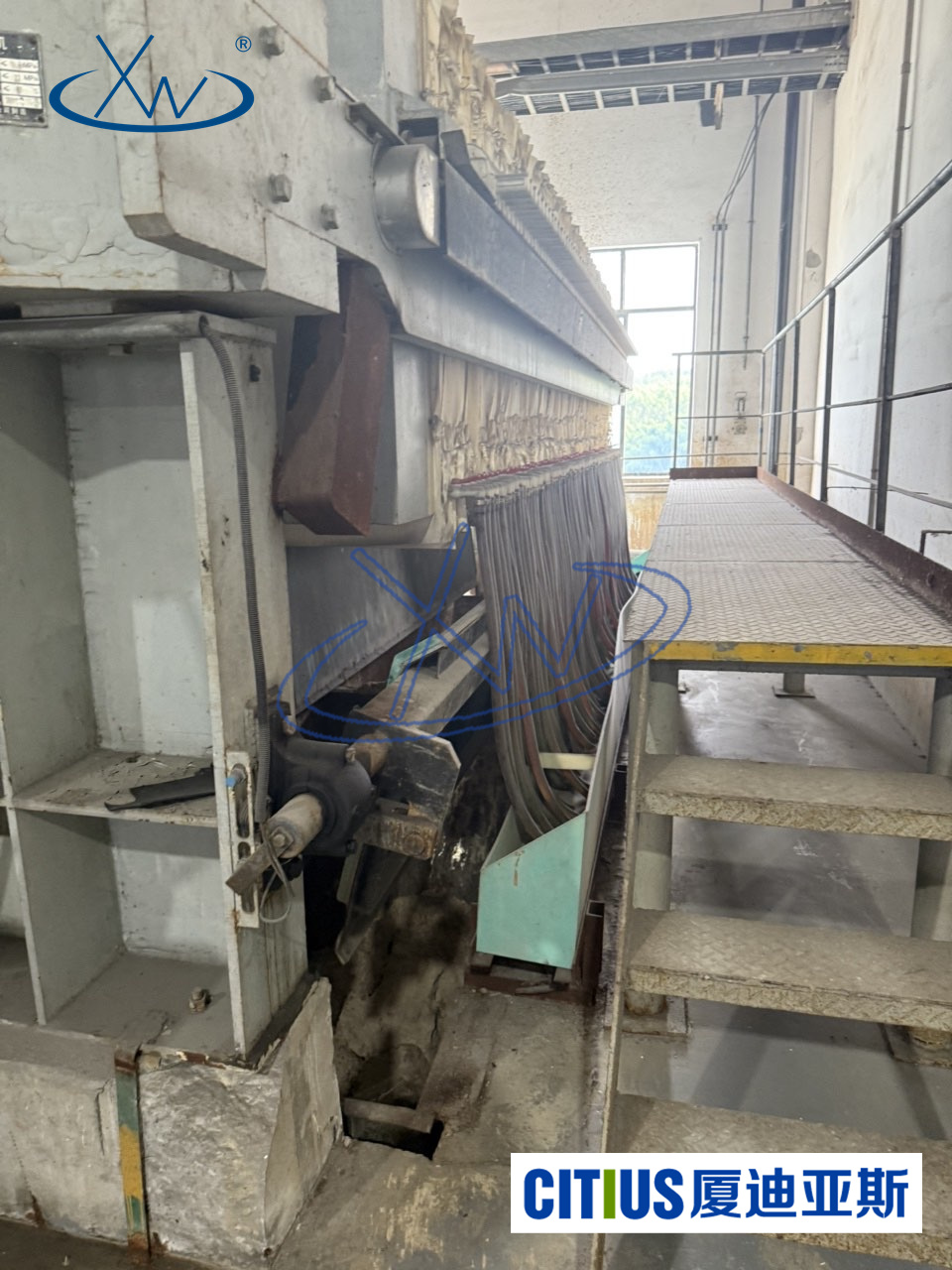
The horizontal vacuum belt filter is a continuously operating solid-liquid separation device. Its basic working process is:
- Evenly distribute the gypsum slurry on the surface of the filter cloth;
- under vacuum negative pressure, the liquid quickly passes through the filter cloth and is drawn into the collection system, while solid particles remain on the filter cloth forming a filter cake;
- as the filter belt moves, the filter cake undergoes washing, secondary filtration, and discharge stages;
- the filter cloth is cleaned with high-pressure washing and reused.
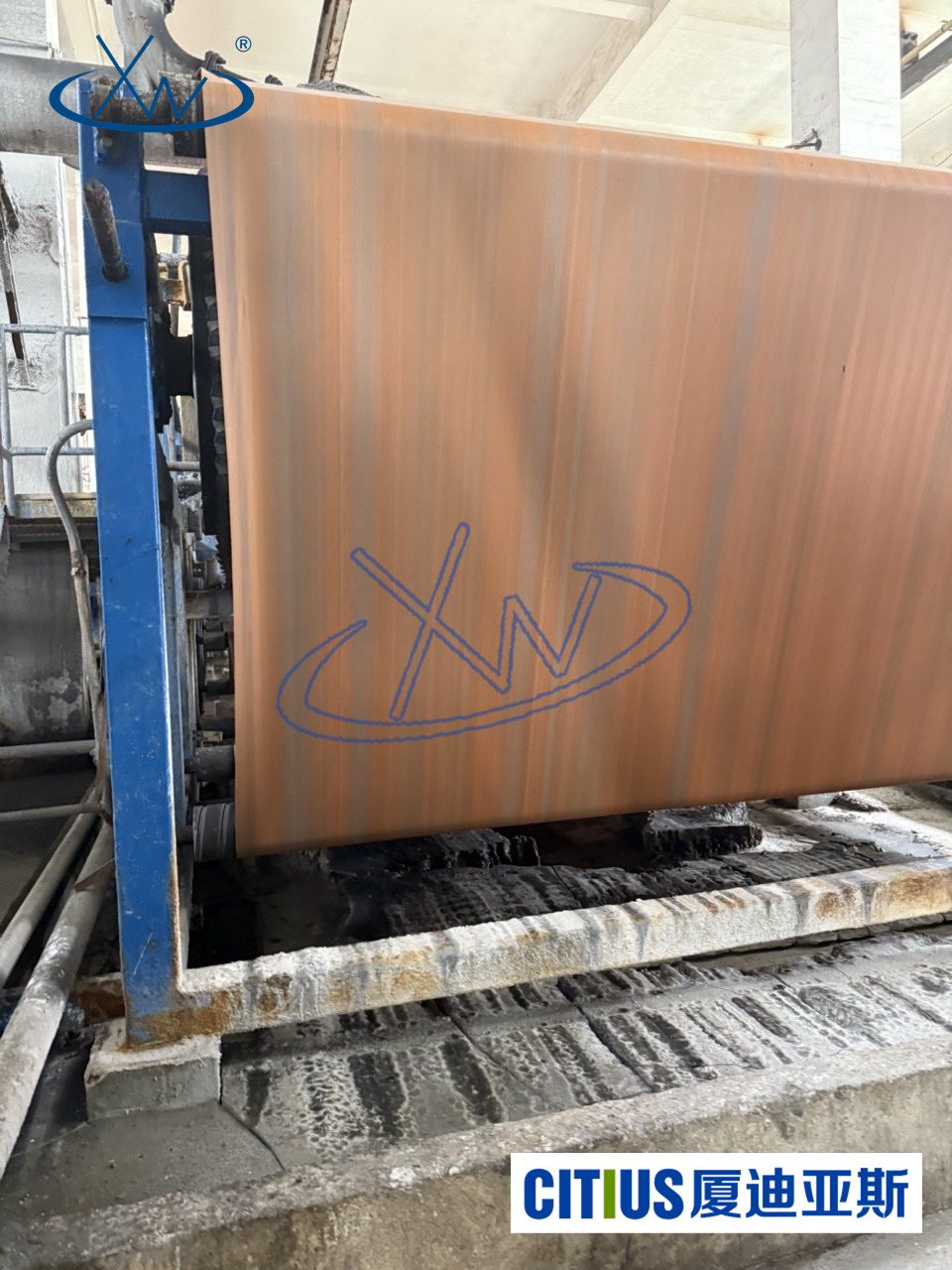
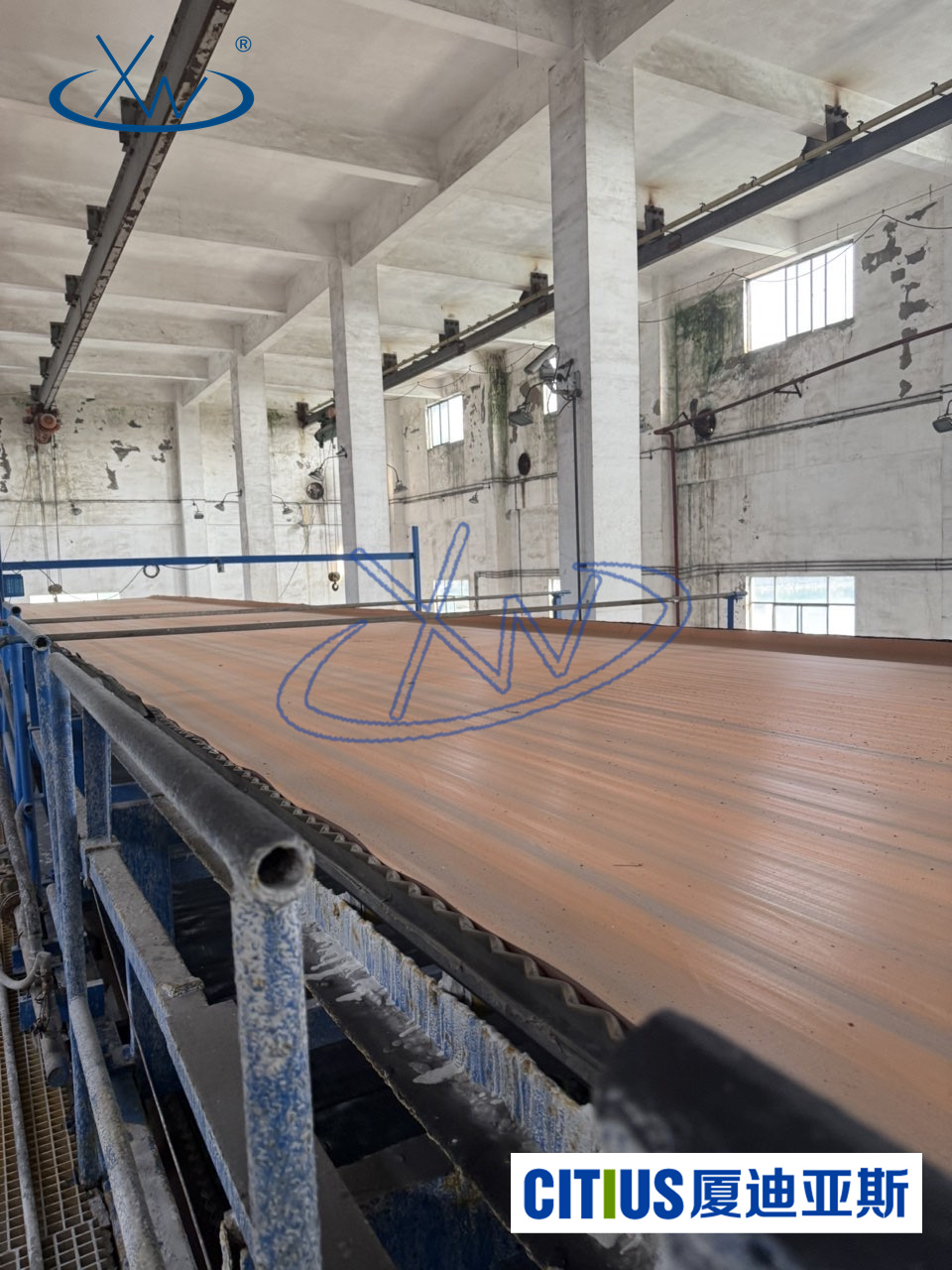
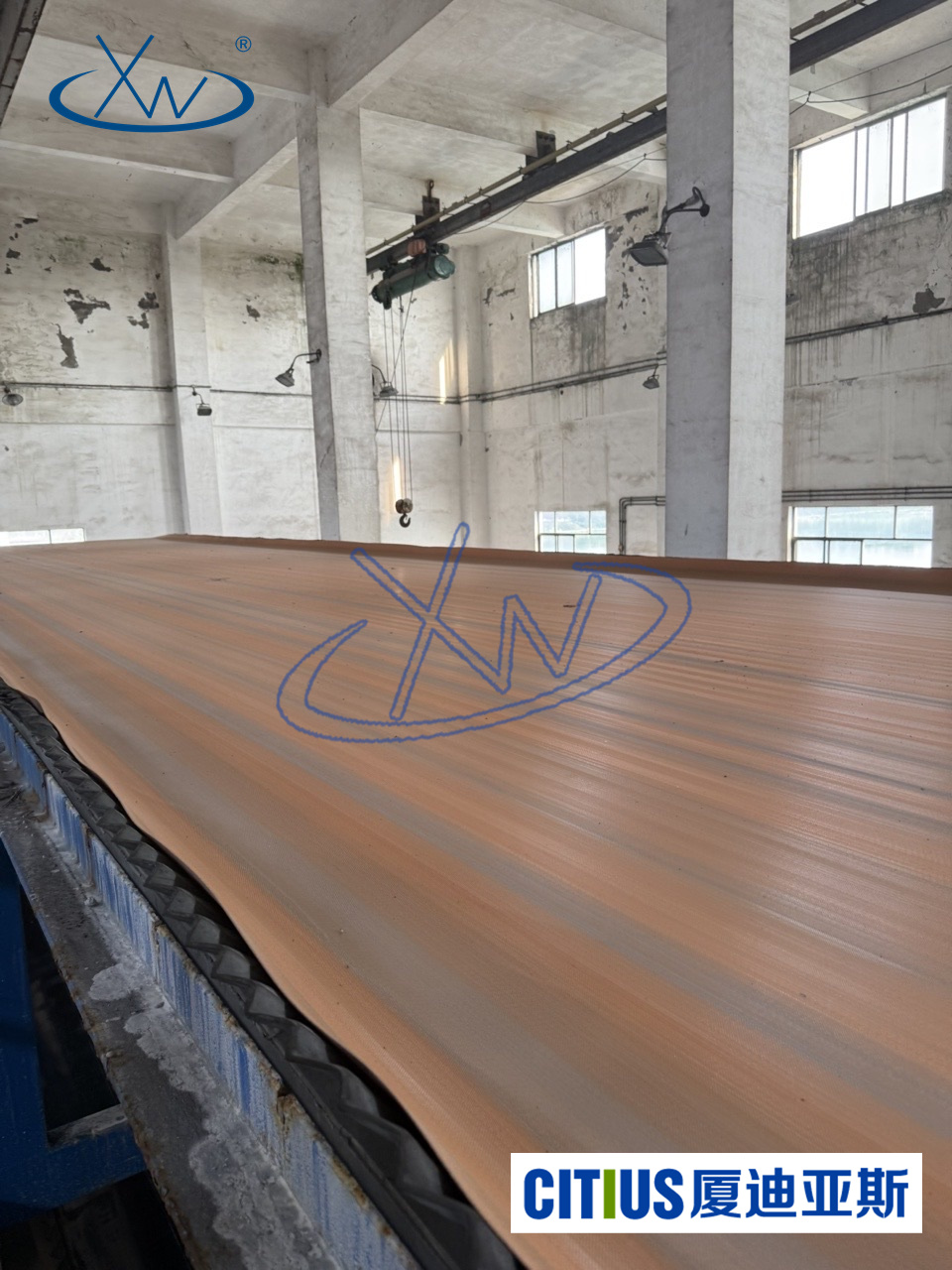
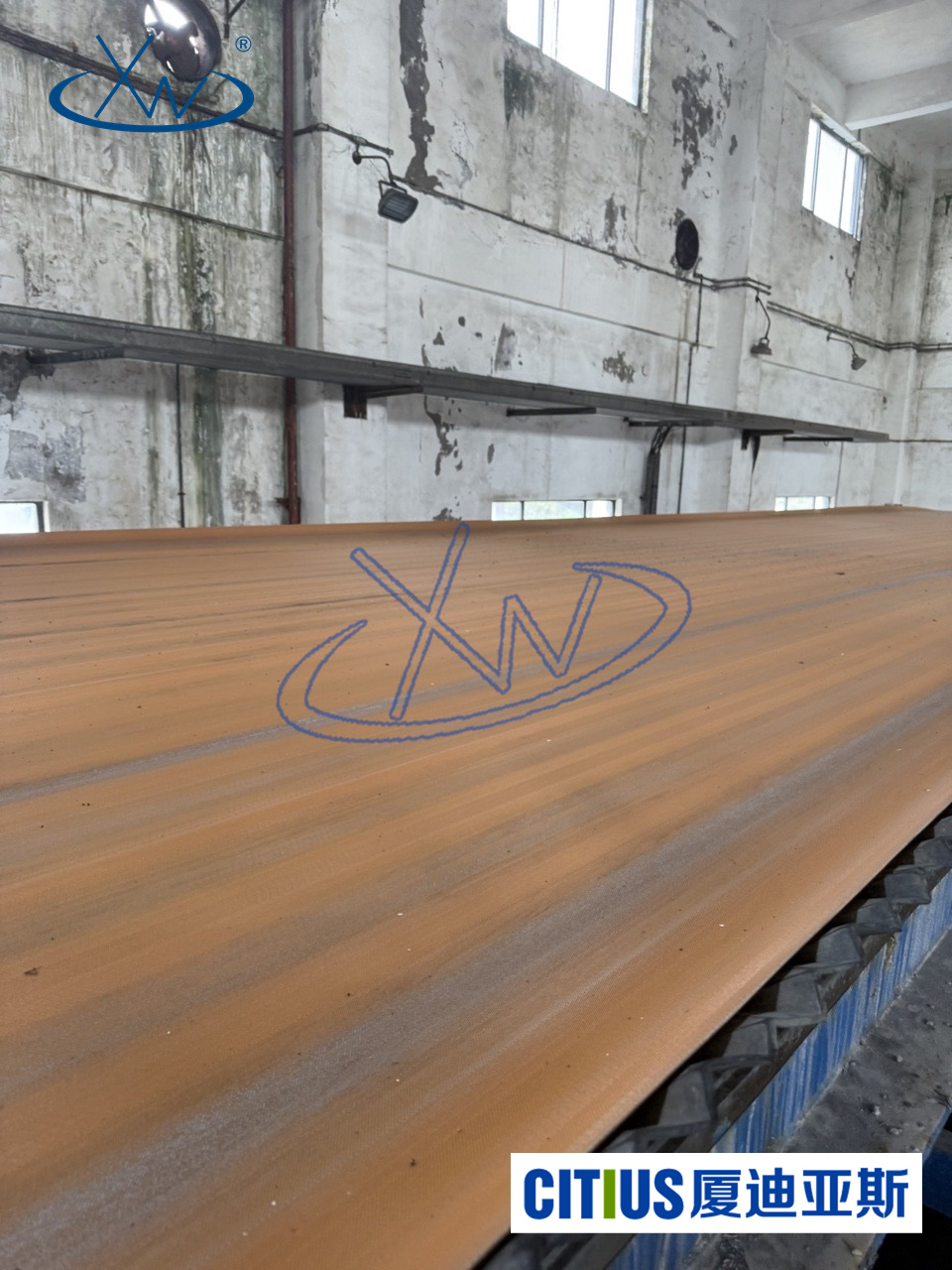
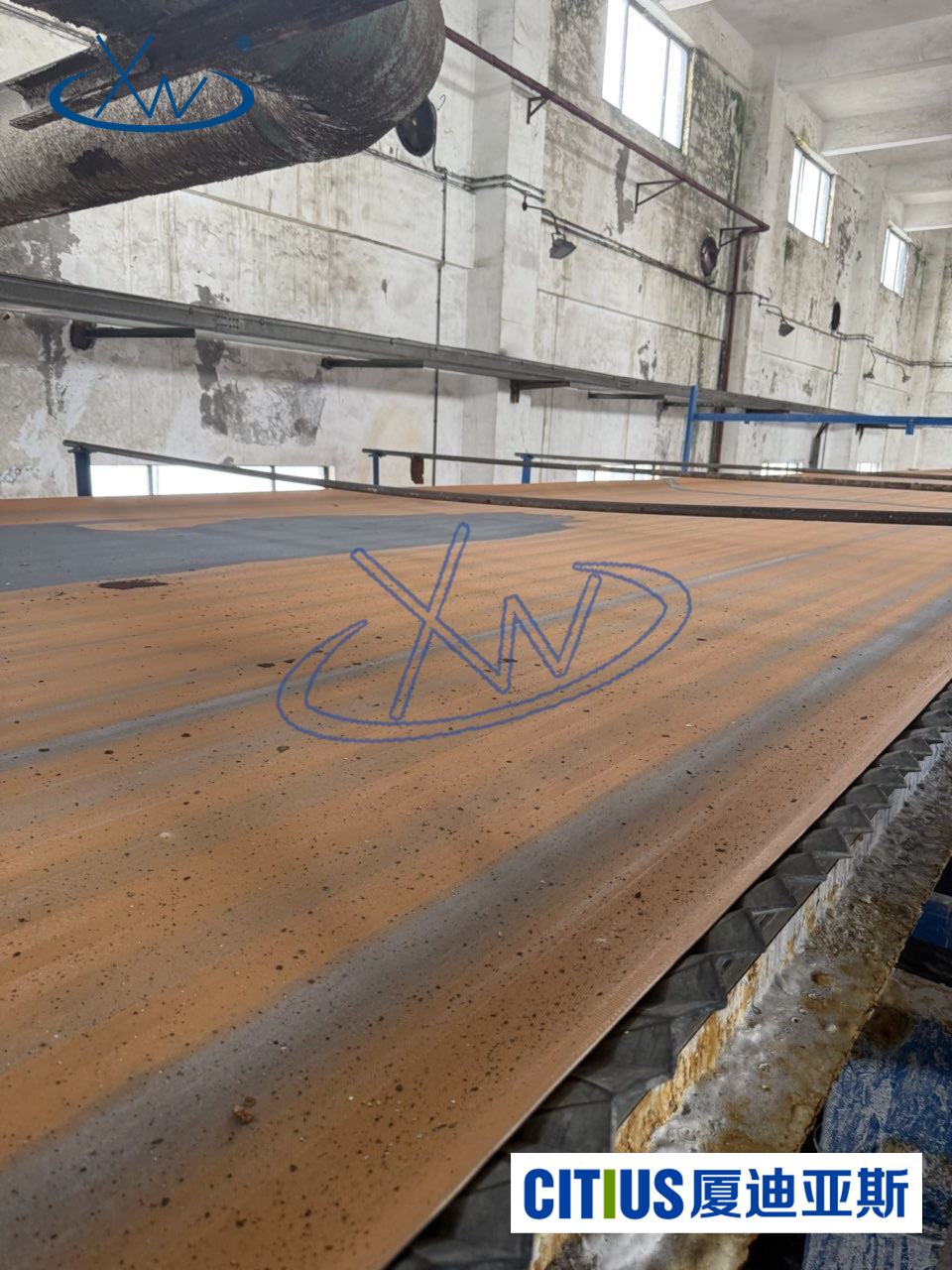
Throughout the process, the filter cloth undertakes the dual roles of solid-liquid separation medium and filter belt transmission component. It must ensure rapid penetration of moisture in the slurry while effectively retaining gypsum crystals; therefore, the performance of the filter cloth directly determines the quality and efficiency of gypsum dehydration.
3. Core Role of Filter Cloth in Power Plant Gypsum Desulfurization
- Improving Gypsum Quality
If desulfurized gypsum has too high moisture content, it not only increases transportation and storage difficulties but also affects its utilization value in industries such as building materials. High-performance filter cloth can effectively reduce gypsum moisture content, making gypsum particle size uniform and crystals complete, meeting industrial by-product gypsum application standards. - Improving System Recycled Water Quality
The clarity of the filtrate is closely related to the pore size distribution of the filter cloth. Reasonable filter cloth design can ensure low concentration of solid suspended particles in the filtrate, thus avoiding secondary pollution caused by system return water. - Reducing Energy Consumption and Operating Costs
The permeability and anti-clogging properties of the filter cloth directly affect the efficiency of vacuum utilization. Filter cloth with low resistance can reduce filtration energy consumption, extend filter cloth service life, and lower replacement frequency and maintenance costs.
4. Challenges of Filter Cloth in Desulfurization Wastewater Treatment
Besides gypsum dehydration, coal-fired power plants also need to treat wastewater generated from flue gas desulfurization. Desulfurization wastewater contains high salt content, heavy metal ions, and suspended particles, which are corrosive and difficult to treat. Horizontal vacuum belt filters are commonly used for solid particle removal in wastewater, and the filter cloth must face the following challenges:
- Highly Corrosive Environment The filter cloth must have acid and alkali resistance and oxidation resistance to operate stably over the long term.
- Wide Particle Size Range Containing both fine colloids and larger particles, the filter cloth must balance retention rate and water permeability.
- Scaling and Clogging Risks Crystallization blockage is prone to occur in high-salt environments, requiring the filter cloth to have good cleaning and recovery capabilities.
5. Performance Requirements and Technological Development of Filter Cloth
To meet the needs of power plant gypsum desulfurization and wastewater treatment, the filter cloth needs to have the following characteristics:
- Balance of High Permeability and High Retention Rate Ensure efficient gypsum dehydration and clear filtrate.
- Anti-Clogging and Easy Cleaning Maintain stable permeability during long-term operation.
- Wear resistance and high strength The filter cloth maintains shape stability under cyclic operation and high-pressure washing.
- Chemical corrosion resistance Adapted to the complex chemical environment in desulfurization wastewater.
With technological advancement, filter cloth is developing in the following directions:
- Multi-layer structured filter cloth Achieving synergy of different functional layers through composite weaving to improve overall performance.
- Surface functionalization treatment Such as anti-adhesion coatings to improve gypsum discharge and self-cleaning ability.
- Intelligent monitoring and lifespan prediction Monitoring filter cloth operating status through sensors to achieve predictive maintenance.
6. Industry Trends and Future Outlook
In " Dual Carbon Goals ” and under the promotion of strict environmental policies, desulfurization and denitrification systems in coal-fired power plants are continuously upgrading. Comprehensive utilization of by-product gypsum and zero discharge treatment of desulfurization wastewater have become important industry development trends. In this process, the role of filter cloth is increasingly prominent:
- Promoting resource utilization of by-product gypsum High-quality gypsum can be widely used in building materials, agriculture, and other fields, achieving waste " to treasure transformation ”。
- Supporting zero discharge of wastewater Efficient solid-liquid separation improves wastewater pretreatment effectiveness, creating conditions for advanced treatments such as evaporation crystallization.
- Improving equipment operational economy Extended filter cloth lifespan and reduced energy consumption support cost reduction and efficiency improvement for power plants.
7. Conclusion
In the limestone-gypsum wet desulfurization process of power plants, — industrial filter cloth and horizontal vacuum belt filter are key components to ensure process stability, efficiency, and environmental compliance. Whether for gypsum dewatering or desulfurization wastewater treatment, the choice of high-performance filter cloth directly affects the environmental and economic benefits of power plants. In the future, with the deep application of new materials, new processes, and intelligent management, filter cloth will no longer be a simple consumable but an important technological support driving clean production and green transformation in power plants.
未来,随着新材料、新工艺和智能化管理的深入应用,滤布将不再是单纯的耗材,而是成为推动电厂清洁生产与绿色转型的重要技术支撑。

Add
No. 16-22 Chunfeng East Road, Xiang'an Torch High tech Zone, Xiamen City, Fujian Province, ChinaAll Rights Reserved. | Privacy Policy |
Tel/ WhatsApp