
-
Filter ClothBelt press filter mesh belt Horizontal belt vacuum filter mesh belt Vertical filter press filter cloth Filter Press Filter Cloth Breathable mesh Technical fabric - drying Technical fabric - high pressure belt Technical fabric - conveyor belt Technical fabric - fiberboard Joint form Edge banding form Accessories (threading)
Search HistoryClear All Records
- All
- Product Management
- News
Deep Dive: The Revolutionary New Nano-Micron Powder Filter
Release time:
2025-04-03
1. Introduction
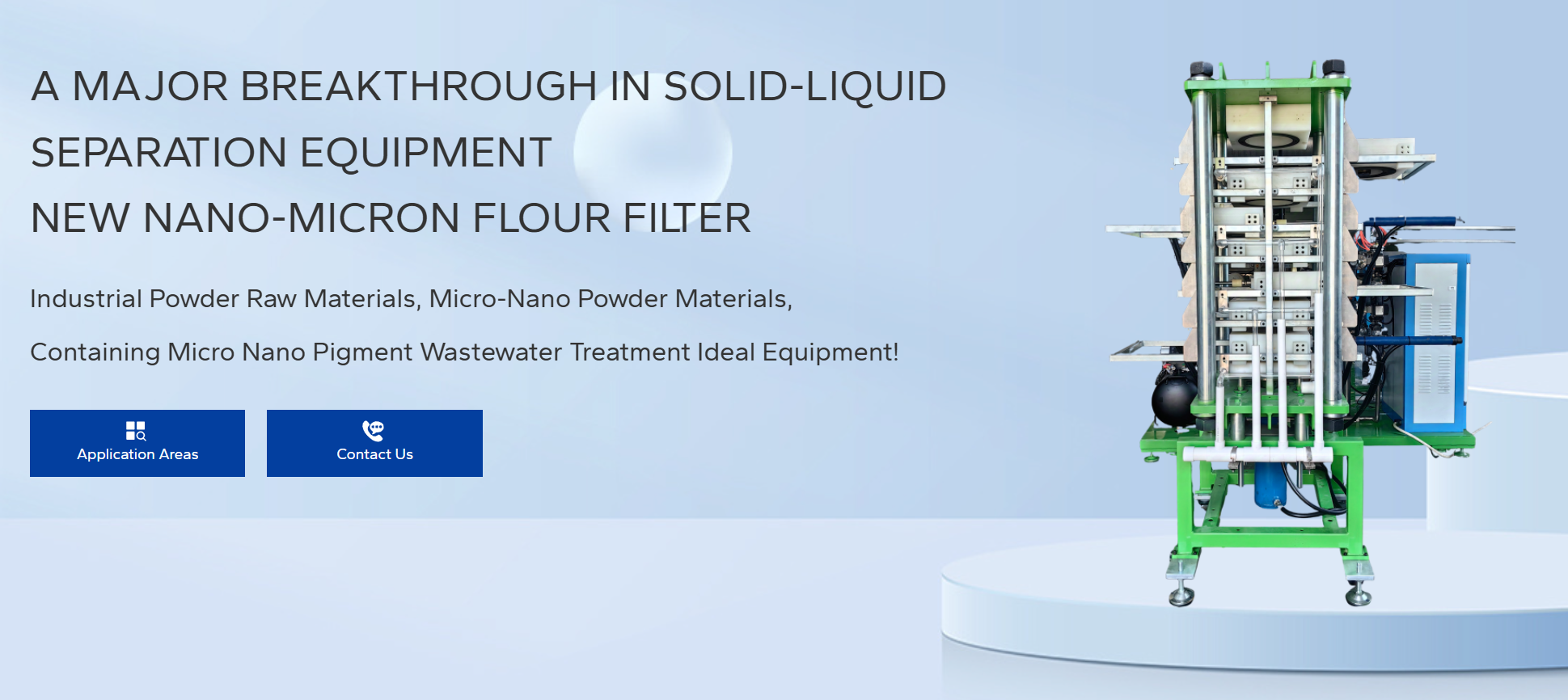
Filtration technology plays a crucial role in various industries, ensuring the purity, efficiency, and sustainability of production processes. With advancements in material science and engineering, the demand for ultra-fine filtration solutions has skyrocketed. The new Nano-Micron Powder Filter emerges as a groundbreaking innovation, offering unprecedented precision in separating fine particles while enhancing productivity and sustainability.
This article explores the working principles, technological advantages, industrial applications, and the long-term impact of the Nano-Micron Powder Filter, highlighting how it is transforming the landscape of industrial filtration.
2. Understanding the Nano-Micron Powder Filter
2.1 What is a Nano-Micron Powder Filter?
The Nano-Micron Powder Filter is an advanced filtration system designed to capture particles as small as nanometers to microns, offering superior separation efficiency and extended operational lifespan. Unlike traditional filters, which may struggle with ultra-fine particles, this system utilizes cutting-edge materials and innovative design to ensure optimal performance.
2.2 How It Works
The filter operates based on a combination of mechanical filtration, electrostatic attraction, and advanced membrane technology. The key functional aspects include:
High-Precision Membranes: Engineered with nano-scale pores, these membranes selectively allow fluids or gases to pass while trapping fine particles.
Electrostatic Interaction: Some designs incorporate charge-based attraction to enhance particle capture.
Self-Cleaning Mechanism: The system prevents clogging through intelligent backflushing or pulse-cleaning technologies.
Customizable Configurations: Filters can be tailored to meet the specific needs of different industrial applications.
These features make the Nano-Micron Powder Filter far superior to conventional filtration systems, especially in industries where high-purity separation is critical.
3. Technological Advancements in Nano-Micron Filtration
3.1 Ultra-Fine Filtration Capability
The filter's ability to separate particles in the 1-1000 nm range significantly enhances process quality, making it ideal for industries requiring ultra-clean production environments, such as pharmaceuticals, electronics, and food processing.
3.2 High Flow Rates with Minimal Pressure Drop
Unlike traditional filters, which often restrict flow rates due to their fine mesh structure, the Nano-Micron Powder Filter employs optimized pore structures to maintain high throughput with minimal energy consumption.
3.3 Enhanced Durability and Longevity
Constructed from high-performance polymers, ceramic membranes, or coated metal alloys, these filters resist chemical degradation, thermal stress, and mechanical wear, ensuring long service life and reducing replacement frequency.
3.4 Smart Monitoring and Automation
Modern filtration systems are increasingly integrating IoT sensors and AI-driven monitoring, allowing for:
Real-time clogging detection
Predictive maintenance
Automated self-cleaning cycles
Remote operational control
This digitalization not only optimizes performance but also reduces downtime and maintenance costs.
4. Industrial Applications of the Nano-Micron Powder Filter
4.1 Chemical and Pharmaceutical Industry
Active Pharmaceutical Ingredient (API) Filtration: Ensuring purity in drug production.
Catalyst Recovery: Capturing valuable catalysts used in chemical reactions.
Solvent Purification: Removing fine contaminants from solvents and liquids.
4.2 Battery and Energy Storage Industry
Lithium Battery Manufacturing: Essential for filtering fine lithium powders to ensure high energy density in batteries.
Hydrogen Fuel Cell Purification: Removing contaminants that could affect membrane performance.
4.3 Metallurgy and Mining
Copper Powder and Rare Metal Recovery: Improving efficiency in metal extraction and refining.
Tailings Filtration: Enhancing sustainability in mining operations.
4.4 Food and Beverage Industry
Microbial and Particulate Removal: Ensuring the highest standards of purity in dairy, juice, and alcoholic beverages.
Flavor and Aroma Preservation: Filtering without stripping essential oils and compounds.
4.5 Electronics and Semiconductor Industry
Ultra-Pure Water Filtration: Ensuring contaminant-free water for chip manufacturing.
Dust and Particulate Control: Protecting sensitive components from airborne contaminants.
5. Benefits of Implementing Nano-Micron Powder Filters
5.1 Improved Product Quality
By capturing even the finest contaminants, industries can achieve higher product purity, reducing defects and ensuring compliance with regulatory standards.
5.2 Energy Efficiency and Cost Reduction
Due to lower pressure drops and longer lifespan, these filters reduce energy consumption and operational costs compared to traditional filtration methods.
5.3 Sustainability and Waste Reduction
Extended filter life reduces waste generation.
Improved material recovery lowers resource consumption.
Advanced backflushing minimizes water and chemical use.
5.4 Operational Efficiency and Reduced Downtime
With automated cleaning cycles and predictive maintenance, companies can reduce system downtime and maximize productivity.
6. Challenges and Future Developments
6.1 Cost of Advanced Materials
While the initial investment in nano-micron filtration systems may be higher than traditional filters, the long-term benefits outweigh the costs through reduced maintenance, energy efficiency, and extended service life.
6.2 Scaling Up for Industrial Applications
Some industries require high-volume filtration, posing challenges in scalability. Ongoing R&D focuses on enhancing filter performance at larger scales.
6.3 Future Innovations
Nanotechnology Integration: Development of even finer membranes for ultra-sensitive applications.
Bio-Compatible Filters: Innovations in medical and biopharmaceutical applications.
AI-Powered Smart Filtration: Further automation and optimization via machine learning.
7. Conclusion
The Nano-Micron Powder Filter represents a paradigm shift in filtration technology, offering unparalleled precision, efficiency, and sustainability across multiple industries. With advancements in nanotechnology, material science, and IoT integration, this filtration system is setting new benchmarks in purity, energy efficiency, and operational control.
As industries continue to demand higher standards of cleanliness and resource efficiency, the adoption of Nano-Micron Powder Filters will only grow. Whether in pharmaceuticals, energy storage, metallurgy, or electronics, these cutting-edge filters are paving the way for a cleaner, more efficient, and technologically advanced future in industrial filtration.
By embracing this technology, businesses can enhance product quality, reduce costs, and contribute to global sustainability goals, making nano-micron filtration a critical component of modern industrial processes.

Add
No. 16-22 Chunfeng East Road, Xiang'an Torch High tech Zone, Xiamen City, Fujian Province, ChinaAll Rights Reserved. | Privacy Policy |
Tel/ WhatsApp