
-
Filter ClothBelt press filter mesh belt Horizontal belt vacuum filter mesh belt Vertical filter press filter cloth Filter Press Filter Cloth Breathable mesh Technical fabric - drying Technical fabric - high pressure belt Technical fabric - conveyor belt Technical fabric - fiberboard Joint form Edge banding form Accessories (threading)
Search HistoryClear All Records
- All
- Product Management
- News
With lithium‑iron‑phosphate production capacity exceeding 5 million tons and energy‑storage orders booked through 2027, how is Citius industrial filter cloth helping to enhance the quality and efficiency of new‑energy materials?
Release time:
2026-05-26
Driven by the continued expansion of the new‑energy industry, the iron phosphate and lithium‑iron‑phosphate sectors are entering a new phase of rapid growth. Demand for lithium‑iron‑phosphate batteries is surging across multiple applications, including electric vehicles, energy‑storage power stations, and large‑scale grid‑peak‑shaving systems. Meanwhile, as an essential precursor to lithium‑iron‑phosphate cathode materials, the market size, process requirements, and quality‑control standards for iron phosphate are undergoing profound transformations.
Against this backdrop, the importance of filtration and solid–liquid separation technologies has been further amplified. In particular, during the production of lithium iron phosphate, processes such as slurry filtration, washing, dewatering, and impurity control directly affect product purity, tapped density, particle-size stability, and subsequent sintering performance. Industrial filter fabrics have ceased to be mere “filtration consumables” in the traditional sense; they have become a critical component that determines both production stability and product quality.
As a leading enterprise in China’s research and manufacturing sector for filtration materials (mesh belts), Xiamen Citius Filtration Materials Technology Co., Ltd. For many years, the company has consistently invested in the fields of new energy, chemicals, hydrometallurgy, and fine-particle filtration. Its industrial filter fabrics are now widely used in production lines for new‑energy materials such as iron phosphate and lithium iron phosphate.
What is iron phosphate?
Iron phosphate, with the general formula FePO₄, is an important inorganic compound. It serves as an iron fortificant in the food and pharmaceutical industries and is also widely used in the production of lithium‑ion battery cathode materials.

At present, when the new‑energy industry refers to “iron phosphate,” it generally means the precursor material used to produce lithium iron phosphate (LFP).
Lithium iron phosphate is currently one of the mainstream cathode materials for lithium-ion batteries worldwide and offers the following advantages:
High thermal stability;
Good safety performance;
Long cycle life;
Costs less than ternary materials;
Suitable for the energy storage and commercial power markets;
It exhibits strong adaptability to high-temperature environments.
In particular, in the energy storage sector, lithium iron phosphate has gradually become the mainstream technology.
According to industry data:
The incremental demand for lithium iron phosphate in 2025 is expected to be approximately 1 million tonnes.
In 2026, an additional increase of approximately 1 million tonnes is expected;
The incremental demand for lithium iron phosphate in 2025 is expected to be approximately 1.3 million tonnes.
By 2030, global lithium iron phosphate production capacity could exceed 10 million tons.
This means that, as the core precursor, iron phosphate will require at least… in terms of supporting production capacity going forward. Exceeding 7 million tons.
The rapid expansion of the new-energy industry has also directly propelled phosphate‑iron filtration technology into an era of high‑quality competition.


Current Status of the Lithium Iron Phosphate Industry: High Growth Coexists with Intense Competition
I. Production capacity continues to expand, but industry competition remains intense.
Current industry data indicate:
In 2024, total lithium iron phosphate production capacity has exceeded 5.2 million tons.
Actual output is approximately 3.7 million tons;
Approximately 2 million tons of idle capacity exist;
The second-generation products still account for approximately 60% of the market;
High‑quality lithium iron phosphate of the third generation is primarily controlled by leading companies.
The main reasons for underutilization of production capacity include:
Raw material prices have risen;
Small businesses face significant financial pressure.
Downstream standards are continuously being raised;
The product iterates rapidly;
Battery manufacturers have strong bargaining power.
At present, most lithium iron phosphate producers have adopted a “production based on sales” model.
Industry profit margins are steadily shrinking, leaving companies increasingly reliant on:
Reduce energy consumption;
Increase the yield;
Enhance filtration efficiency;
Control impurities;
Reduce the residual liquid in the filter cake;
Enhance washing performance.
Therefore, the importance of filtration systems has increased significantly.
Rising raw material costs are driving upgrades to the lithium iron phosphate production process.
Since 2024, costs across the phosphate chemical industry chain have risen significantly.
For example:
The price of sulfur has risen from RMB 1,580 per ton to RMB 3,800 per ton.
Industrial-grade monoammonium phosphate has risen from RMB 5,700–5,800 per ton to RMB 6,300 per ton.
The cost of wet-process acid purification continues to rise.
Phosphoric acid prices have risen from 6,750 yuan to nearly 7,000 yuan.
What does the rise in raw material prices mean?
This means that companies must minimize, as much as possible:
Material loss;
Waste of detergent;
Iron loss;
Filter residues;
Product contamination.
And ultimately, all these issues come down to the filtration system itself.
If the filter cloth performance is unstable:
The filtrate is running off the material;
Filtration rate decreases;
The filter cake has a high moisture content;
Inadequate washing;
Filter cloth clogging;
Increased cleaning frequency;
It will directly increase unit production costs.
Accordingly, new‑energy materials companies are placing increasing emphasis on the long-term stability of industrial filter fabrics.

In the production process of lithium iron phosphate, why is filtration so critical?
The production of iron phosphate typically involves:
Iron source reaction;
Phosphorus source synthesis;
Aging;
Washing;
Solid–liquid separation;
Dry;
Crush.
Among them, solid–liquid separation runs throughout the entire production process.
In particular, in wet‑process manufacturing, iron phosphate slurries typically exhibit the following characteristics:
Fine particles;
High viscosity;
Easy to agglomerate;
Clog-resistant fabric;
High in salt;
Acidic or weakly acidic environment;
Continuous production is highly intensive.
This places extremely high demands on the filter cloth.
If the filter cloth is chosen improperly, the following issues are likely to occur:
1. Material leakage issue
Fine particles penetrate the filter cloth, resulting in:
The filtrate is cloudy;
Product loss;
The downstream equipment is blocked.
2. The filter cake has a high moisture content.
Impact:
Subsequent drying energy consumption;
Sintering efficiency;
Particle size control.
3. Low washing efficiency
Residual impurities can affect:
Battery cycling performance;
Electrical conductivity;
Metal impurity index.
4. Short filter cloth lifespan
Acidic operating conditions and continuous operation can easily lead to:
Filter cloth hardening;
Contraction;
Fracture;
Block the hole.
Accordingly, high-performance industrial filter fabrics have become an essential foundational material in the production of lithium iron phosphate.

Application Advantages of Xadidas Industrial Filter Cloth in the Iron Phosphate Industry
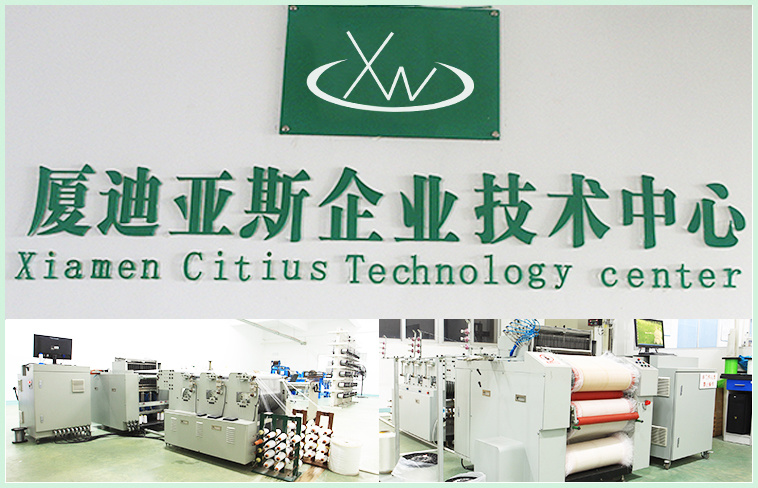
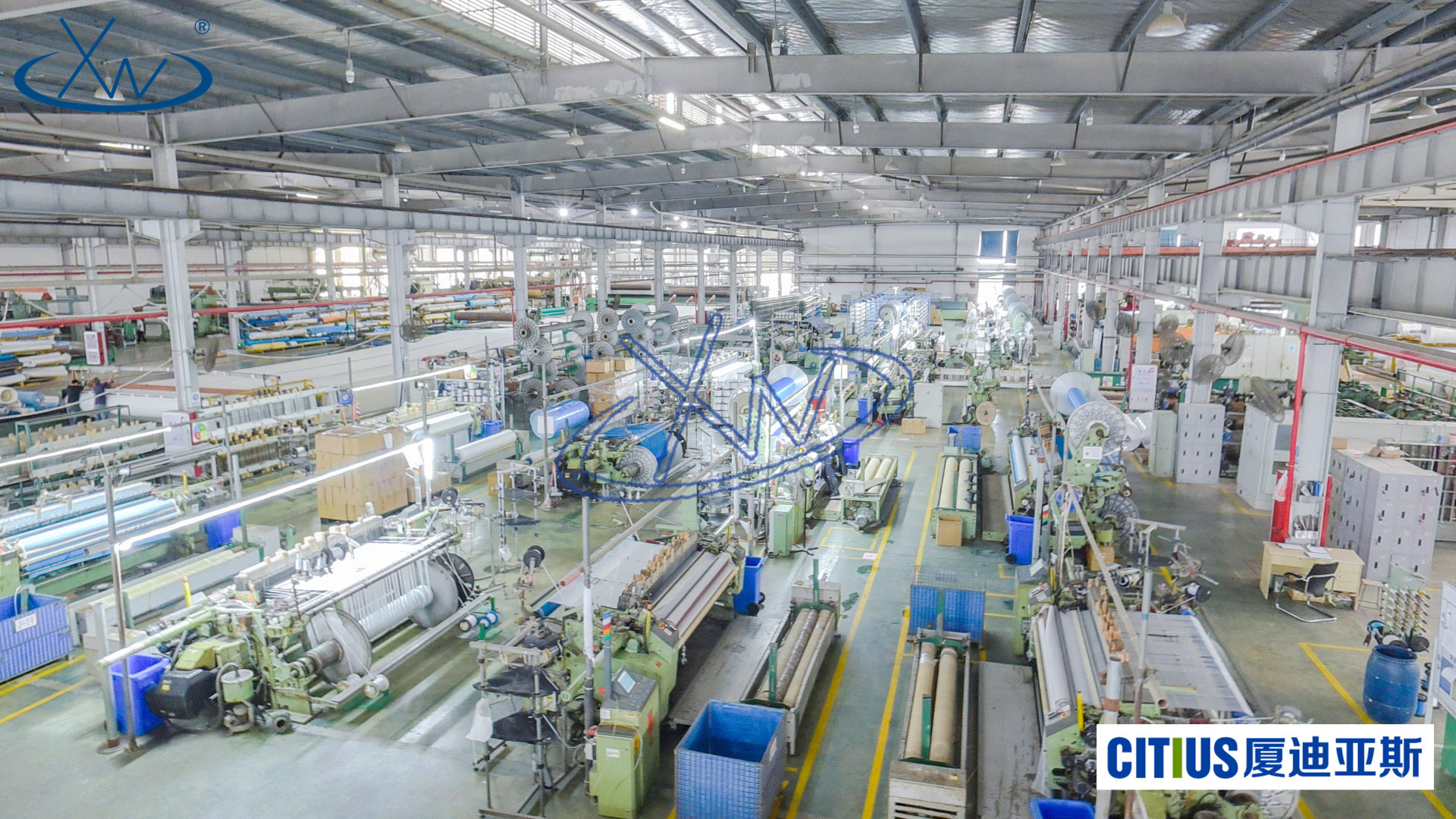
As a filtration materials technology company with 30 years of industry experience, Xiamen Citius Filtration Materials Technology Co., Ltd. Has long been serving the new energy, new materials, hydrometallurgy, and fine chemical industries.
For the lithium iron phosphate industry, Citius industrial filter fabrics focus on addressing the following core issues:
I. Adaptation to Ultrafine Particle Filtration
Iron phosphate particles have a high degree of fineness.
Ordinary filter cloth is prone to:
Initial material run;
Aperture instability;
Filter cake formation is difficult.
Citius passed through:
High-precision weaving;
Monofilament structure optimization;
Multi-layer composite design;
Surface treatment technology;
Enhance retention capacity and filtration stability.
It maintains stable filtration performance even when processing next-generation fine-particle slurries.

II. Enhancing Washing Efficiency
Lithium iron phosphate products have extremely stringent impurity control requirements.
In particular:
Sodium ion;
Sulfate;
Free acid;
Metal ions;
All of these factors will affect the subsequent performance of lithium iron phosphate.
Citius filter cloths can form a uniform filter cake structure, enhancing the penetration efficiency of the wash liquor and thereby reducing:
Water consumption for washing;
Washing time;
Residual liquid rate.
This is particularly important for large-scale continuous production lines.
III. Reducing the Moisture Content of the Filter Cake
New energy materials companies are increasingly focused on energy consumption.
The lower the moisture content of the filter cake:
The lower the drying cost;
The higher the drying efficiency;
The better the crush stability.
Citius enhances dewatering efficiency by optimizing the filter cloth’s air permeability and peel-off performance.
On certain continuous filtration units, the cake‑removal performance can be significantly improved.
IV. Strong acid and corrosion resistance
The lithium iron phosphate process often involves:
Wet-process phosphoric acid;
Acidic mother liquor;
Salt systems.
Ordinary filter cloth is prone to:
Hydrolysis;
Intensity decreases;
Fiber embrittlement.
Citius has developed corrosion-resistant filtration materials tailored for harsh operating conditions, suitable for long-term use in:
Acidic slurry;
High-salt environment;
Continuous operation under high load.
V. Compatible with a Wide Range of Filtration Equipment
Currently, the commonly used equipment in the lithium iron phosphate industry includes:
Horizontal vacuum belt filter;
Belt filter;
Plate-and-frame filter press;
Centrifuge;
Vacuum drum filter.
Citius can provide customized machining tailored to various equipment configurations, meeting the continuous and large-scale production requirements of the new energy industry.
The rising price of lithium iron phosphate is further boosting demand for high‑quality filtration.
Since 2025, the energy storage market has been experiencing rapid growth.
Industry data shows:
The market price of lithium iron phosphate has risen from approximately RMB 30,000 per ton to about RMB 60,000 per ton.
The increase is close to 100%;
Some battery orders are already scheduled through 2027.
The rapid growth in energy storage demand is driving battery manufacturers to set increasingly stringent requirements for cathode materials.
In the future, the core of competition will no longer be simply “whether or not we have production capacity,” but rather:
Product consistency;
Batch stability;
Metal impurity control;
Tap density;
Compaction performance;
Cycle life.
Moreover, many of these indicators are closely related to the filtration and washing stages.
Accordingly, the lithium iron phosphate industry is transitioning from “extensive capacity expansion” to a phase of “quality‑driven manufacturing.”
The importance of filtration materials is also shifting from a supporting role to a core process step.
In the era of new energy, filtration materials are emerging as a critical enabling technology.
In the past, many companies believed that:
“Filter cloth is merely a consumable.”
However, in the new energy materials industry, an increasing number of companies are beginning to recognize that:
It is often these seemingly minor, yet easily overlooked, basic materials that truly affect stable production.
Especially in the fields of iron phosphate and lithium iron phosphate:
Ultrafine particles;
High-purity requirements;
Continuous production;
Large-scale washing;
High-value slurry;
All of them place higher demands on the filtration system.
Industrial filter cloth no longer merely determines the filtration rate; it also determines:
Product quality;
Energy consumption level;
Washing efficiency;
Total production cost.

Conclusion
As the global new-energy vehicle and energy-storage industries continue to expand, the markets for iron phosphate and lithium iron phosphate are expected to maintain long-term growth.
At the same time, the industry is transitioning from a phase of “competing on scale” to a new stage characterized by competition in quality, craftsmanship, and stability.
For lithium iron phosphate manufacturers, filtration systems are no longer merely simple solid–liquid separation equipment; they have become a critical component that influences product quality, production efficiency, and overall costs.
Xiamen Citius Filtration Materials Technology Co., Ltd. As a leading enterprise in the research and manufacturing of technical fabrics for filtration applications (such as mesh belts), we have long been dedicated to developing industrial filtration solutions tailored to demanding operating conditions. We provide high‑stability, highly corrosion‑resistant industrial filter cloths and customized technical services to industries including new energy, advanced materials, and wet‑process chemical manufacturing.
Under the overarching trend of continuous advancement in next-generation energy materials, high-performance filtration materials will also serve as a crucial cornerstone for driving the industry’s high-quality development.

Add
No. 16-22 Chunfeng East Road, Xiang'an Torch High tech Zone, Xiamen City, Fujian Province, ChinaAll Rights Reserved. | Privacy Policy |
Tel/ WhatsApp