
-
Filter ClothBelt press filter mesh belt Horizontal belt vacuum filter mesh belt Vertical filter press filter cloth Filter Press Filter Cloth Breathable mesh Technical fabric - drying Technical fabric - high pressure belt Technical fabric - conveyor belt Technical fabric - fiberboard Joint form Edge banding form Accessories (threading)
Search HistoryClear All Records
- All
- Product Management
- News
Spiral Mesh Belt: The Key Filtration Material for Efficient Dewatering of Washed Sand Sludge
Release time:
2025-10-15
High-efficiency Application of Spiral Mesh Belt in Dewatering Sand and Slurry
—— A green solid-liquid separation solution using belt press filters
With the rapid development of construction, infrastructure, and mineral resources, the mechanism sand production industry continues to heat up. However, during the sand and gravel washing and screening process, large amounts of muddy wastewater are generated. If these highly turbid slurries—with their high sediment content—are left untreated, they not only waste water resources but also lead to pollution of rivers and land.
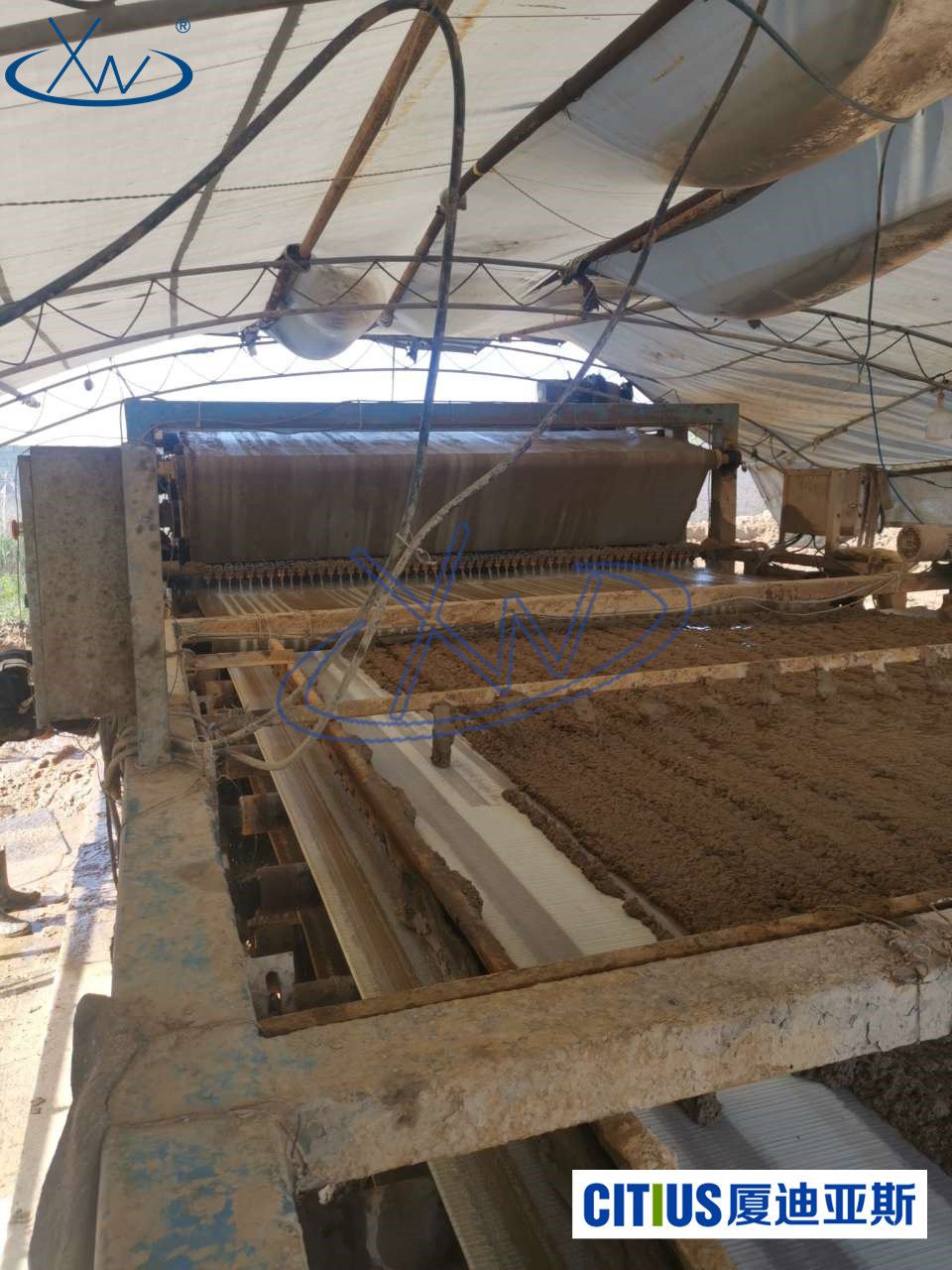
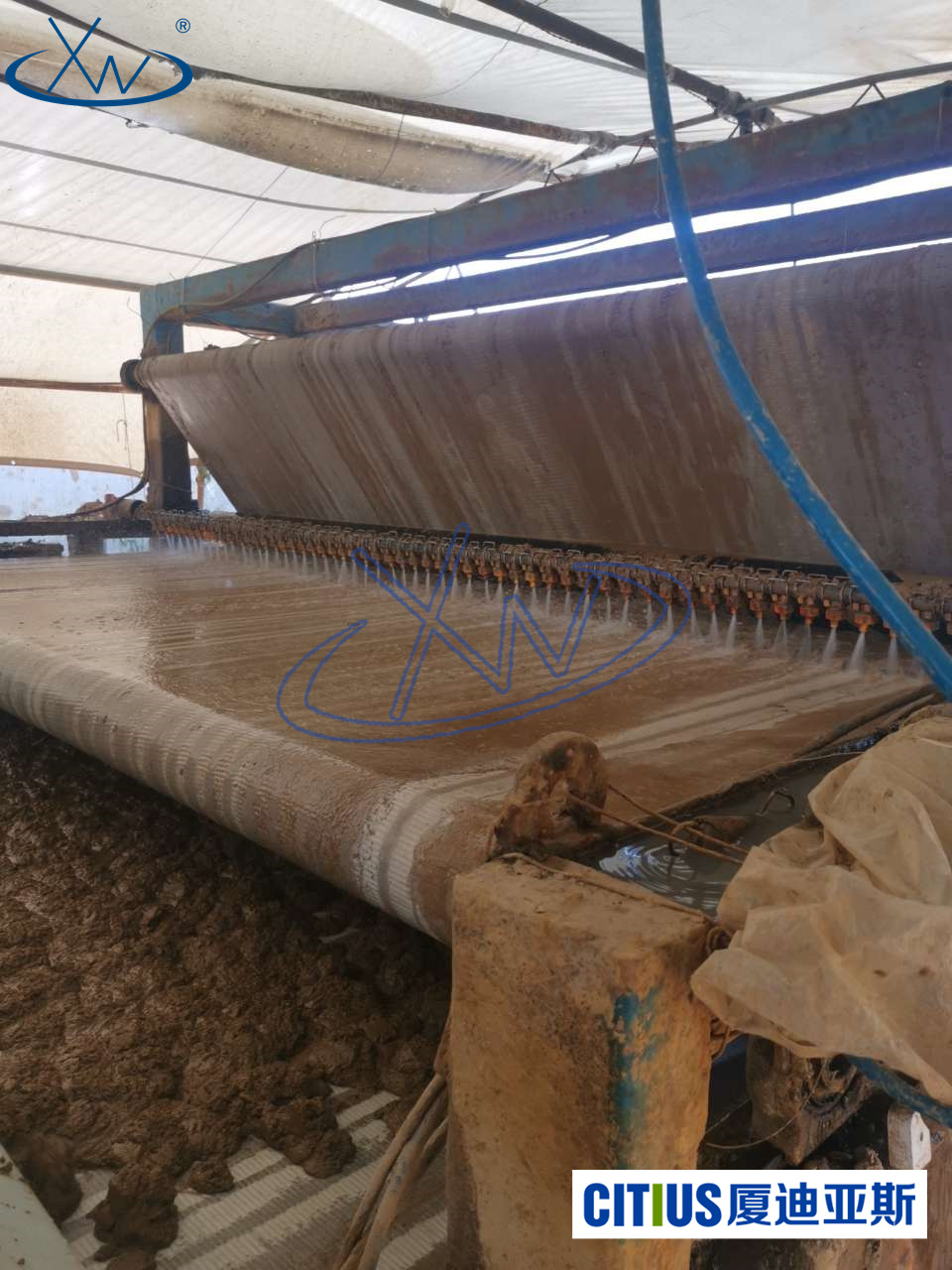
Against this backdrop, ** Belt Press Filter Machine Belt Filter Press ) Cooperation Spiral mesh conveyor belt Spiral Mesh Belt ) ** Its application has become a highly efficient and environmentally friendly solution for dewatering sand-washing slurry, and is increasingly being adopted by more and more sand and gravel plants, washing lines, and environmental protection enterprises.
I. Characteristics of Washed Sand Slurry and Challenges in Its Treatment
Washing sand slurry primarily consists of fine sand particles, clay, fly ash, and suspended solids, with particle sizes typically ranging from 5 to 100 Between micrometers, the solid content of the mud-water mixture typically ranges from 5% to 15% 。
Mud has the following typical characteristics:
- Fine particles, high viscosity —— Fine particles remain suspended in water for a long time, easily leading to secondary pollution;
- Mud content is unstable —— The raw ore exhibits significant clay content variations, leading to fluctuations in the dewatering process.
- Contains residual flocculant —— If filtration is insufficient, the filtrate will be difficult to reuse;
- High-moisture filter cakes are difficult to transport or stack. 。
While traditional methods such as sedimentation tanks and thickening tanks can partially clarify the slurry, they suffer from low dewatering efficiency, large land requirements, and long processing cycles. In contrast, the belt press filter, combined with a spiral mesh belt, enables Continuous, efficient, and energy-saving mechanical dewatering process , it possesses significant advantages in environmental protection and resource recycling.
II. Working Principle of the Belt Press Filter
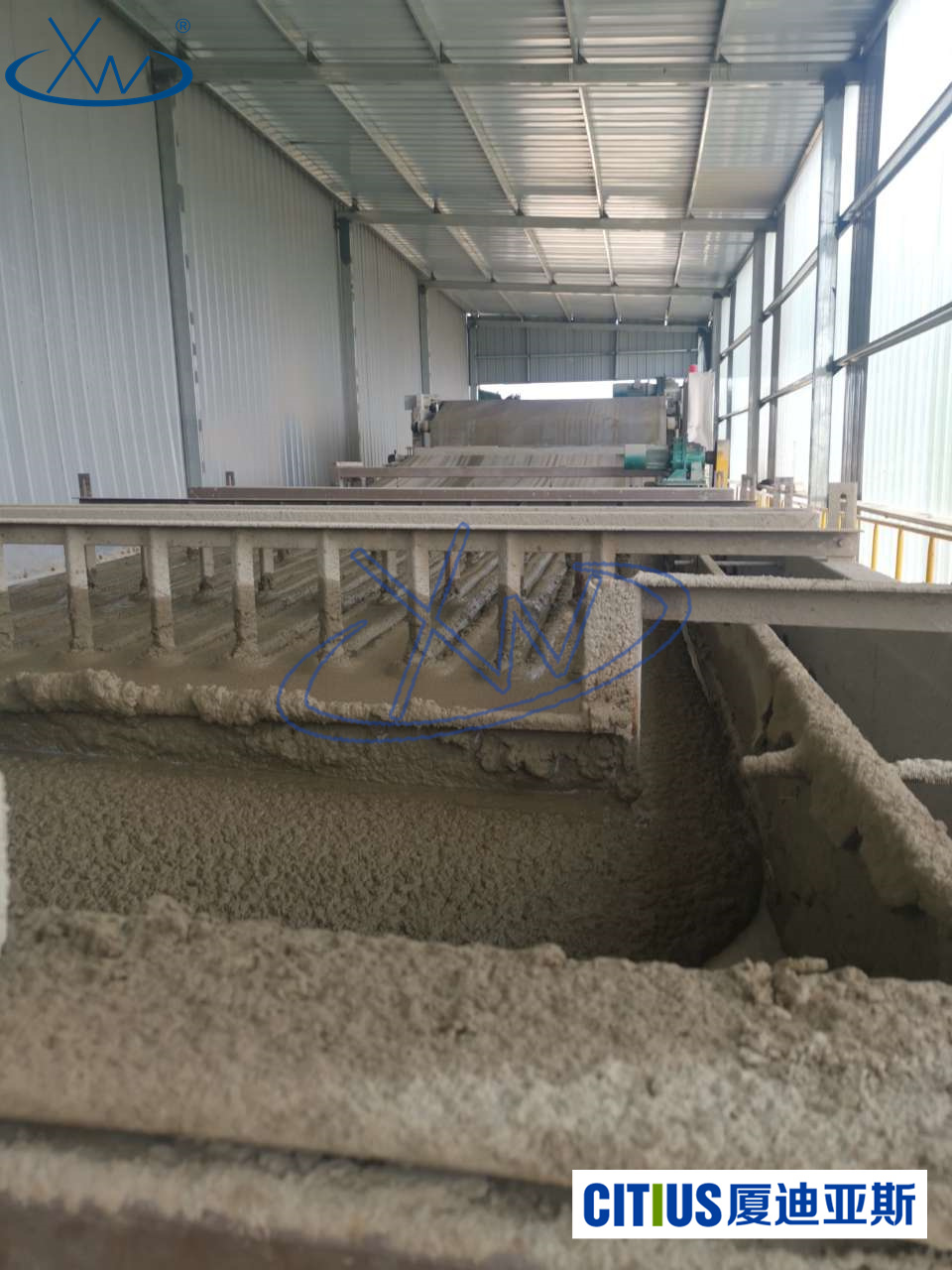
The belt press filter is a continuously operating solid-liquid separation device widely used in applications such as dewatering municipal sludge, sand and gravel mud, mineral slurries, and chemical wastewater.
Its typical workflow is as follows:
- Mixing and Flocculation
The sand washing slurry is first mixed with a flocculant, causing the fine particles to form dehydratable flocs. - Gravity Dewatering Zone
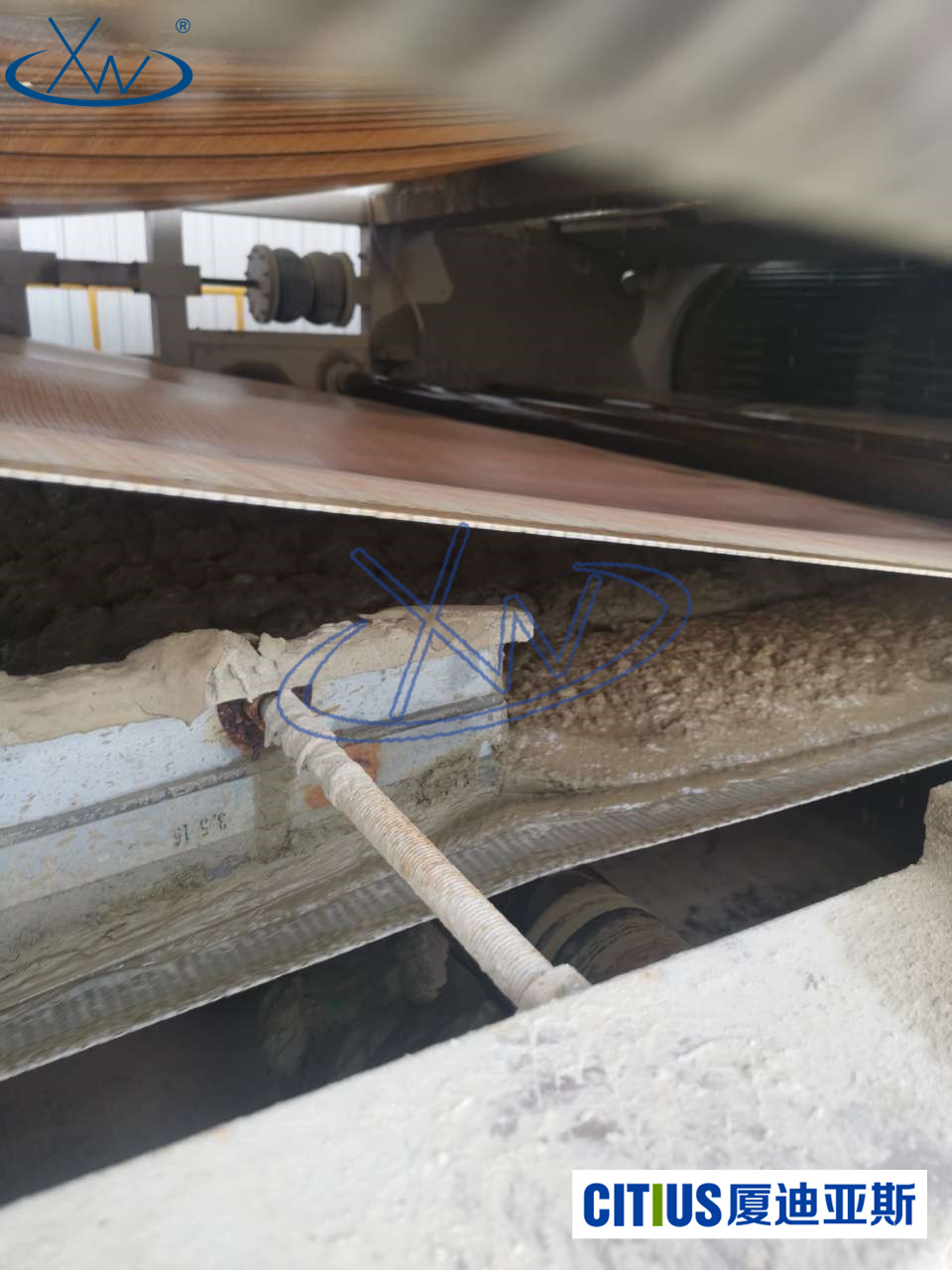
The slurry is evenly spread onto the upper-layer spiral mesh belt via a fabricator, allowing free water to drain naturally by gravity, thus forming a preliminary mud layer. - Wedge-shaped area pre-compression
The upper and lower filter belts gradually converge and apply gentle pressure, compacting the sludge layer and further reducing its moisture content. - High-pressure squeezing zone
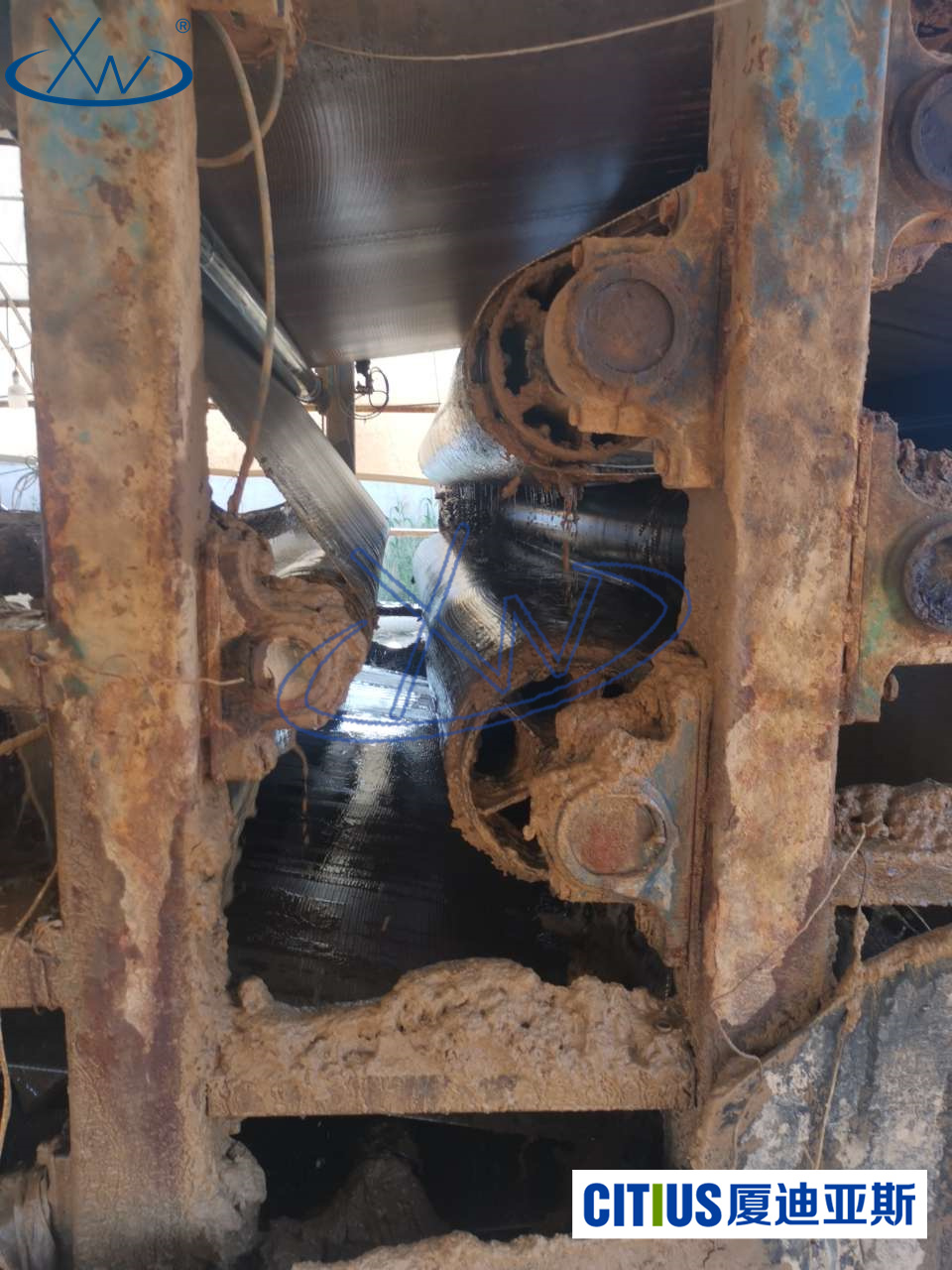
The mud layer is clamped between two spiral mesh belts and repeatedly squeezed through multiple sets of rollers, thoroughly extracting the filtrate. - Filter cake discharge and filter belt cleaning
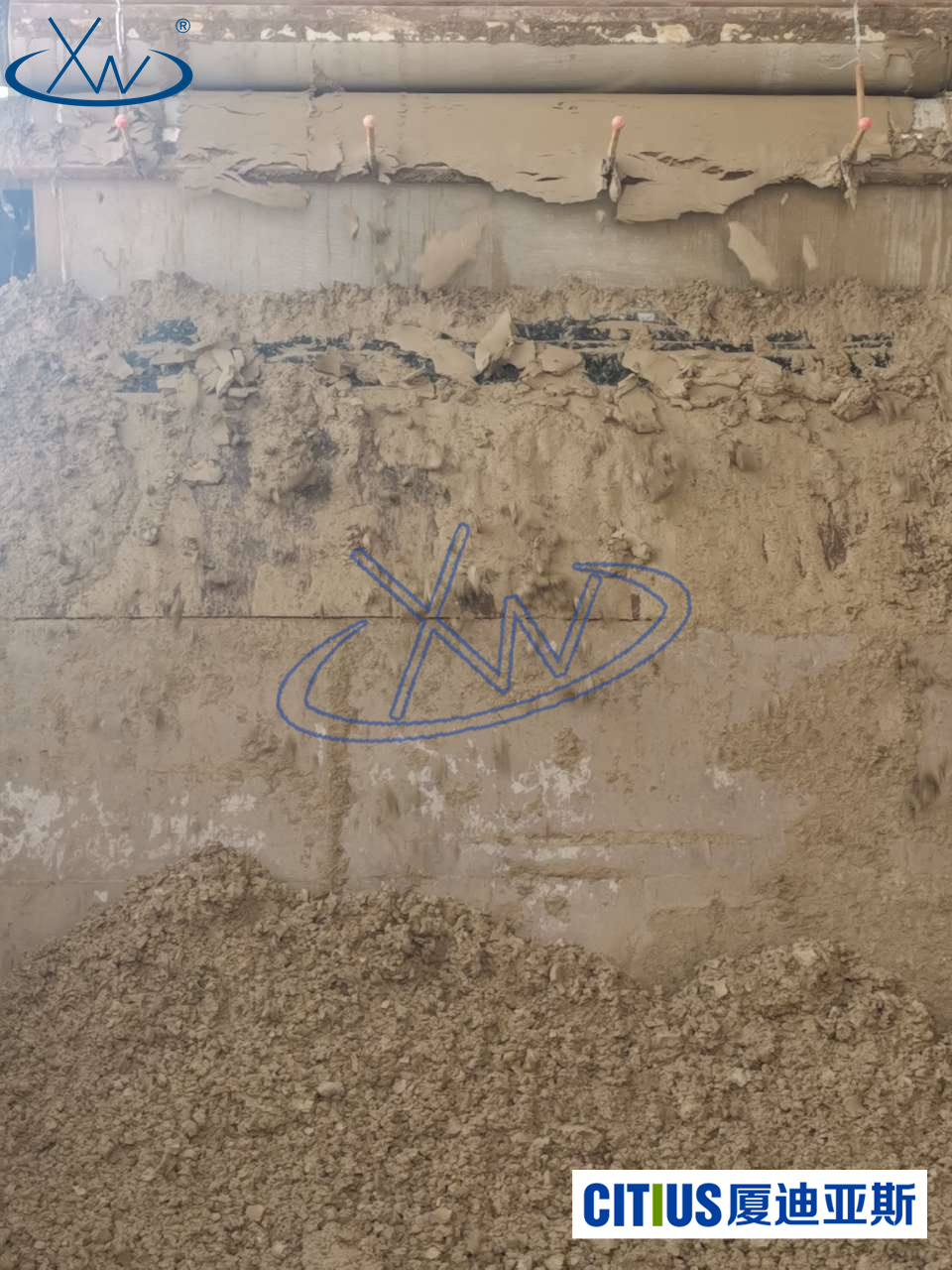
The dewatered sludge cake is automatically discharged via a scraper, while the filter belt is cleaned with high-pressure spray and then reused in a continuous cycle.
The entire process is continuous and stable, requiring almost no manual intervention, making it particularly well-suited for continuous production scenarios such as sand washing plants.
III. The Key Role of the Spiral Mesh Belt in the System
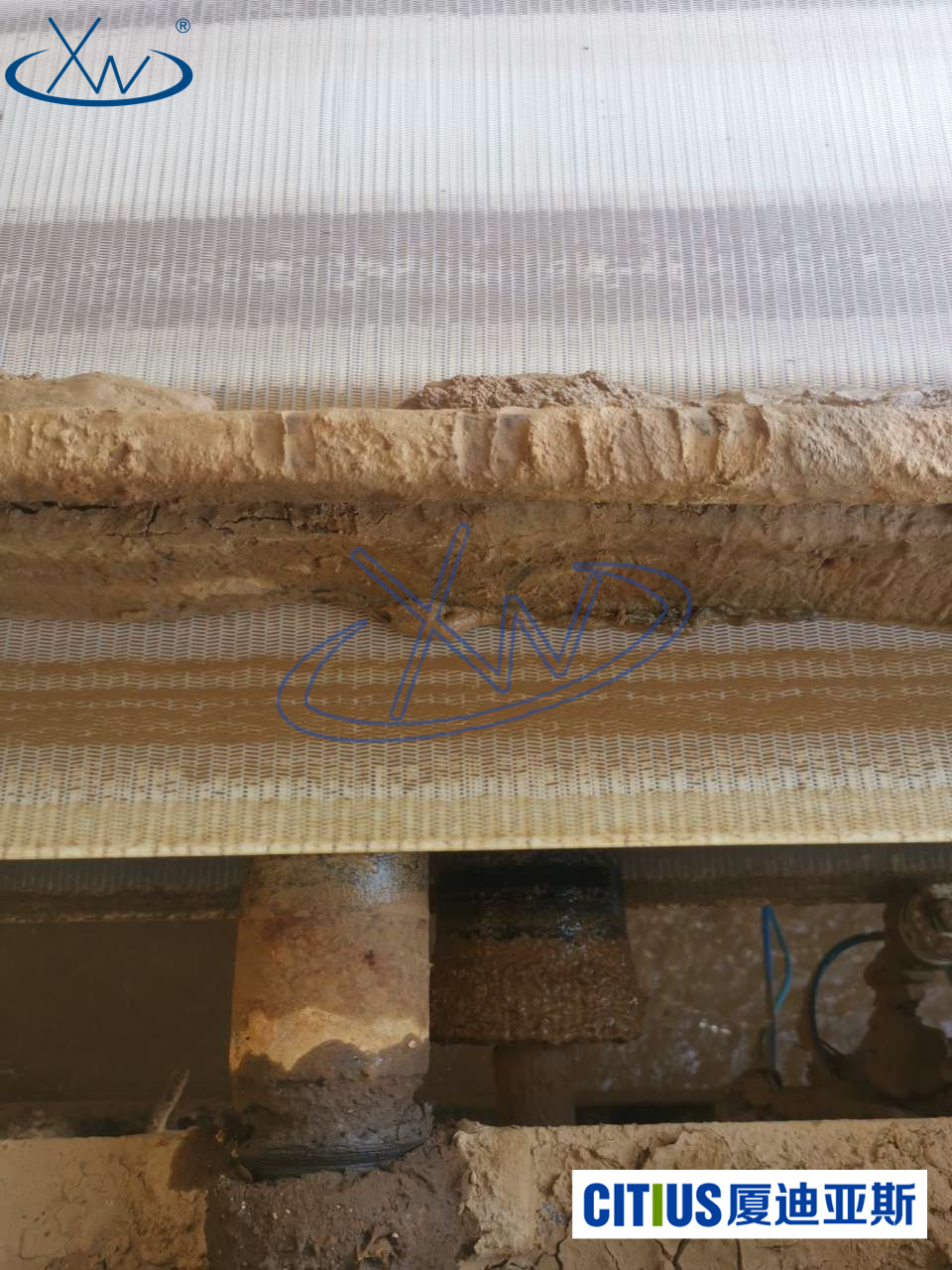
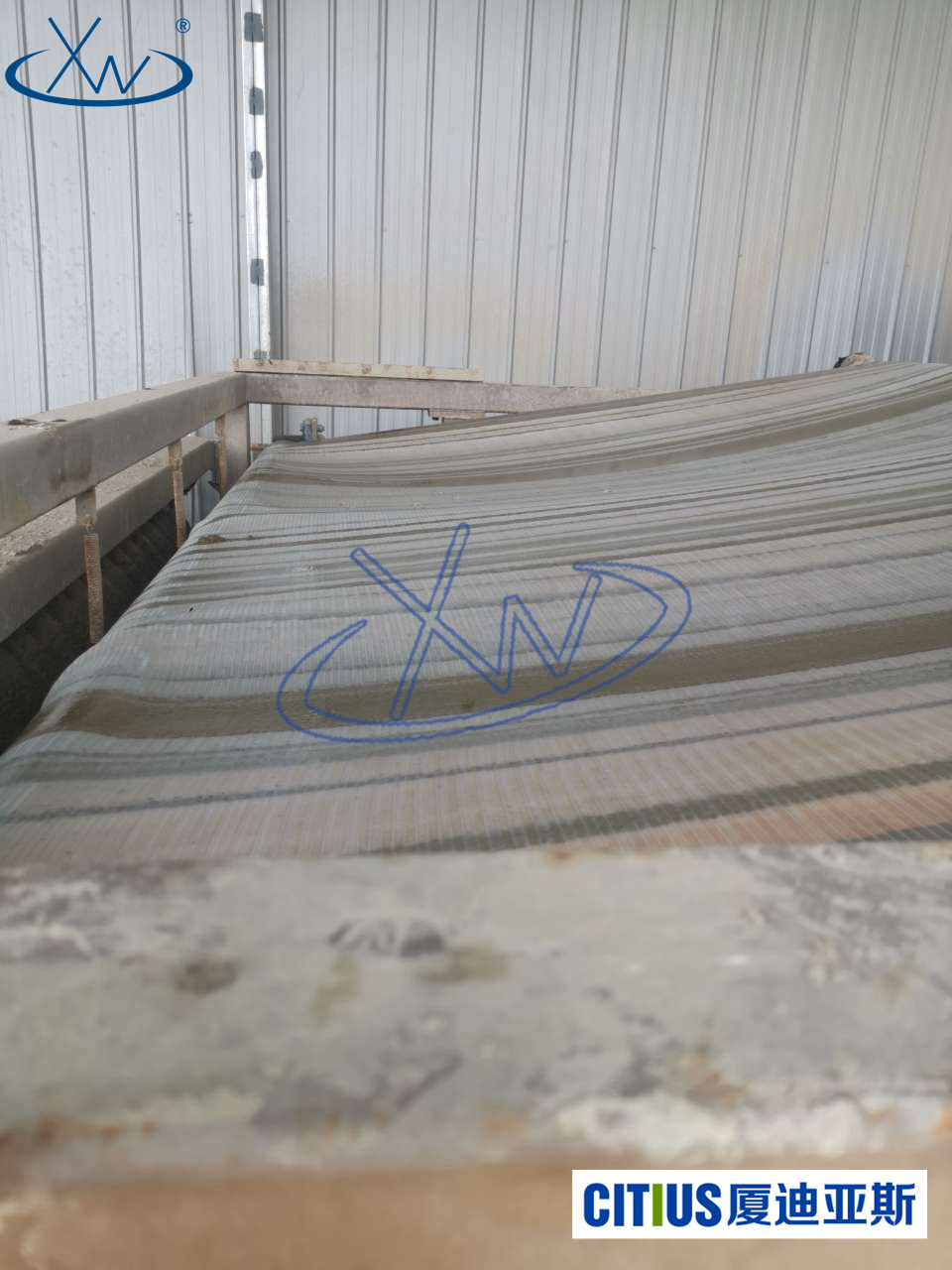
The spiral mesh belt is the core filtration medium of the belt press filter, serving not only to support the physical pressing of the sludge but also determining the speed at which filtrate is discharged and the moisture content of the filter cake.
Its structure employs Spiral Link Rings and Monofilament Weaving This method has the following unique advantages:
- High strength and wear resistance
The mesh belt is made of polyester. PET ) Made from a single filament, it can withstand high tension and repeated compression without easily deforming or breaking; - Good permeability and resistance to clogging
The spiral structure forms a continuous channel, allowing mud moisture to drain quickly and preventing the mud layer from easily becoming compacted. - Smooth surface, cake easily peeled off
The filter cake is thoroughly removed, minimizing residue and enhancing filtration efficiency; - Good dimensional stability
The heat-set mesh belt operates smoothly, with high-temperature resistance and excellent chemical corrosion resistance. - Easy to clean, long-lasting
The filter belt can be repeatedly used through online high-pressure water cleaning, resulting in low maintenance costs.
In the sand washing slurry dewatering process, slurry with different fineness and viscosity can be processed using spiral mesh belts of various models. For example:
- Medium-concentration slurry 10% to 15% Solid Content : Recommending medium-flux spiral mesh belts (such as the docking-type mid-hole structure);
- Fine-grained, high-viscosity slurry : Recommended encrypted double-layer spiral mesh belt to enhance filter cake quality;
- Mud with a high sand content : Optional wear-resistant, thickened mesh belts available to extend service life.
IV. System Operation Performance and Dewatering Effectiveness
Through on-site application data statistics, the typical performance indicators of the belt press filtration system equipped with a spiral mesh belt in sand-washing slurry treatment are as follows:
Project
|
Parameter Range
|
|---|---|
Mud feed solids content
|
5% ~ 15%
|
Filter cake moisture content
|
25% ~ 35%
|
Filtrate Recovery Rate
|
≥95%
|
Processing capability
|
2 ~ 10 m³/h·m² (According to filtration area)
|
Filtrate Turbidity
|
≤200 mg/L , reusable sand washing system
|
After dewatering, the filter cake becomes a loose granular form, which can be directly transported, landfilled, or used as a raw material for building materials—effectively achieving… “ Mud-water separation, resource recovery, zero emissions ” Goal.
V. Environmental Protection and Economic Benefit Analysis
- Water-saving and energy-efficient :
The filtrate can be recycled for sand-washing production, achieving a water-saving rate of up to 80% The above;
The vacuum system and pressing system consume less energy than the centrifugal dewatering method; - Small footprint :
With the Dense Pool + Compared to filter press combinations, the footprint is reduced. 40% , compact in structure and easy to install; - Low operating costs :
The filter belt boasts a long lifespan and enables continuous operation without frequent shutdowns; it also significantly reduces labor and maintenance costs. - Environmentally compliant emissions :
The filtrate is clear and can be directly reused or discharged to meet regulatory standards; the sludge cake is easy to stack and does not cause secondary pollution.
Therefore, belt press filters have become one of the mainstream devices for dewatering sand-washing slurry, particularly well-suited for use in small to medium-sized sand and gravel plants, sand- and aggregate-producing lines, construction waste treatment stations, and other similar applications.
VI. Future Trends: From Energy Efficiency to Intelligence
As environmental protection equipment upgrades toward digitalization and intelligence, belt press filters are also continuously innovating:
- Intelligent Tensioning and Deviation Correction Control System : Ensure stable filter belt operation and minimize manual adjustments;
- Online Cleaning and Remote Monitoring : Real-time monitoring of filter belt cleanliness, vacuum level, and filtrate quality;
- New-type Composite Filter Belt : Combining monofilament with a multi-layer spiral mesh structure to enhance dewatering rate and lifespan;
- Modular Structural Design : Convenient for maintenance, filter belt replacement, and capacity expansion upgrades.
These technological upgrades have made the spiral mesh belt filtration system more energy-efficient, reliable, and highly automated.
VII. Conclusion
In this typical solid-liquid separation scenario of dewatering sand and mud slurry, Spiral Mesh Belt and Belt Press Filter Machine The combination demonstrates significant advantages. —— Continuous operation, efficient dehydration, and energy-saving and environmentally friendly.
High-performance spiral mesh belts not only enhance the slurry dewatering speed and improve filter cake quality, but also ensure the system’s long-term stable operation.
As environmental regulations continue to tighten and the sand-washing industry undergoes intelligent transformation, belt press filtration technology is emerging as the cornerstone of sand-washing production lines. “ Standard Equipment ” Meanwhile, the optimized design and selection of the filter belt are key to achieving efficient dewatering.

Add
No. 16-22 Chunfeng East Road, Xiang'an Torch High tech Zone, Xiamen City, Fujian Province, ChinaAll Rights Reserved. | Privacy Policy |
Tel/ WhatsApp