
-
Filter ClothBelt press filter mesh belt Horizontal belt vacuum filter mesh belt Vertical filter press filter cloth Filter Press Filter Cloth Breathable mesh Technical fabric - drying Technical fabric - high pressure belt Technical fabric - conveyor belt Technical fabric - fiberboard Joint form Edge banding form Accessories (threading)
Search HistoryClear All Records
- All
- Product Management
- News
What equipment is used for dewatering phosphate mine tailings? A Guide to Selecting Vacuum Belt Filters and Filter Cloth
Release time:
2025-10-15
The critical application of industrial filter cloths in tailings treatment —— Horizontal vacuum belt filter aids clean production of phosphate ore
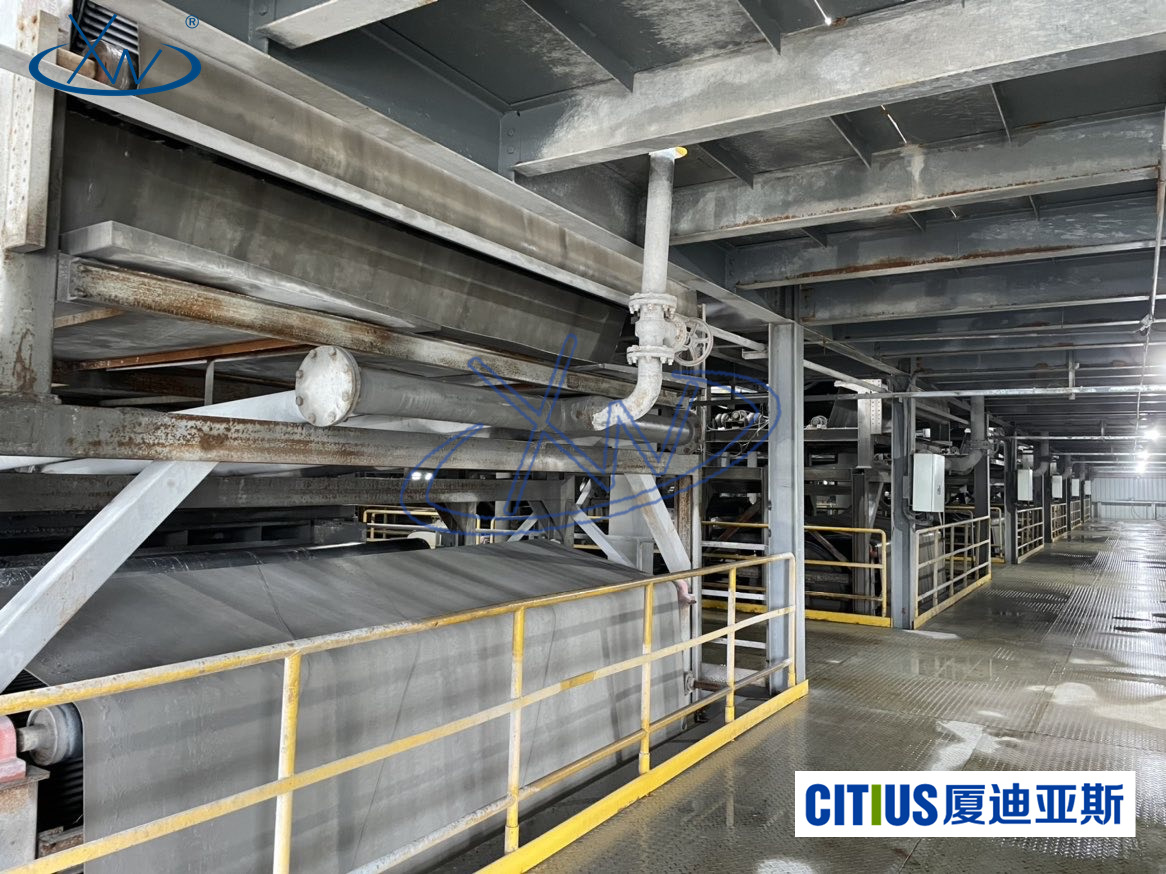
In the phosphate chemical and mineral processing industries, the efficient filtration of tailings slurry and the recycling of water resources have long been technical challenges in the solid-liquid separation process. With the rise of green mining and “ Dual-Carbon Strategy ” The advancement of technology has made it increasingly difficult for traditional thickening tanks combined with filter press dewatering to meet the demands of efficient, environmentally friendly, and continuous production. At this point, Horizontal Vacuum Belt Filter Machine Horizontal Vacuum Belt Filter ) And high-performance industrial filter cloths The combination is emerging as an ideal solution in the field of phosphate ore tailings treatment.
I. Industry Background of Phosphate Mine Tailings Treatment
Phosphate ore generates large amounts of tailings slurry during beneficiation, flotation, and chemical processing—slurries that typically exhibit Fine particles, low solids content, and complex chemical properties and other characteristics. If discharged directly, this not only leads to the wastage of phosphorus resources but also triggers severe issues such as water body eutrophication and land contamination.
According to statistics, for every transaction 1 About one ton of phosphate rock is produced. 0.3 ~ 0.6 Ton of tailings slurry, from the tailings P ₂ O ₅ The content remains as high as 1% ~ 3% Therefore, how to efficiently separate solids from liquids to recover usable phosphorus resources while simultaneously enabling the reuse of treated wastewater has become a critical step for phosphate chemical enterprises in reducing energy consumption and minimizing environmental risks.
II. Working Principle and Advantages of the Horizontal Vacuum Belt Filter
Horizontal Vacuum Belt Filter It is a continuously operating solid-liquid separation device, particularly suited for dewatering tailings in industries such as mining, chemical engineering, and metallurgy. Its core working principle is:
- Evenly Distributed Feeding : The tailings slurry is evenly distributed onto the filter cloth via a distributor, forming a filter layer of a certain thickness.
- Vacuum Filtration : The filter belt runs through the vacuum suction zone, where liquid is rapidly extracted under the action of negative vacuum pressure, forming a preliminarily dewatered filter cake.
- Multi-stage washing : Configurable multi-stage countercurrent washing zones allow for the washing of filter cakes, further removing impurities or residual chemicals.
- Dry suction and unloading After enhanced dehydration in the drying and suction zone, the moisture content of the filter cake is reduced; meanwhile, the filter cloth automatically discharges the material in the卸料区 via a scraper or by being flipped over with a belt.
Compared to traditional plate-and-frame filter presses, its significant advantages include:
- Continuous operation, strong processing capability : No need for frequent starts and stops, making it ideal for high-flow processing of mine tailings;
- Low energy consumption, high efficiency : The negative-pressure filtration process consumes less energy and boasts a high filtrate recovery rate;
- The filter cake has low moisture content. : Can be stably controlled at 10% ~ 18% , facilitating storage and transportation;
- Automatically controllable : Includes filter cloth tensioning, cleaning, web guiding, vacuum adjustment, and more—entirely operated through intelligent automation.
III. The Core Role of Industrial Filter Cloth in Phosphate Mine Tailings Filtration
The filter cloth is the heart of the entire filtration system. “ Filter the heart ” , its performance directly determines the flux of tailings slurry filtration, the dryness of the filter cake, and the stability of the equipment.
For media such as phosphate mine tailings—characterized by fine particles, high黏性, and strong chemical activity—the filter cloth must possess the following properties:
- High Permeability and Anti-Clogging Performance
The pore size of the filter cloth must be precisely controlled—ensuring efficient transmission of vacuum suction while preventing fine phosphate sludge particles from penetrating the filter layer, which could otherwise cause turbidity in the filtrate. - Excellent acid and alkali resistance as well as corrosion-resistant performance
Phosphorus ore tailings often contain flotation reagents, sulfates, or phosphates, placing stringent demands on the chemical resistance of filter cloths. - Excellent peeling performance
The filter cake should be easy to detach, reducing adhesion and improving operational efficiency. - Dimensional stability and long-lasting wear resistance
The filter cloth, subjected for extended periods to vacuum suction, tensile forces, and slurry friction, must maintain structural stability.
In practical engineering, specialized manufacturers like Xiamen Citius provide customized filter cloth solutions tailored to the specific compositions of different tailings. For instance, by employing special weaving structures and surface treatments—such as heat setting, calendering, or anti-clogging coatings—their products can significantly enhance filtration speed and regeneration performance, ultimately extending the service life of the filter cloths.
IV. Typical Process Parameters for Phosphate Tailings Filtration
Project
|
Parameter Range
|
|---|---|
Tailings slurry solid content
|
10% ~ 25%
|
Vacuum Level
|
-0.06 ~ -0.08MPa
|
Filter cake thickness
|
8 ~ 30mm
|
Filter cloth speed
|
0.3 ~ 5.0 m/min
|
Filter cake moisture content
|
10% ~ 18%
|
Filtrate Turbidity
|
≤0.1%
|
Through rational filter cloth selection and system optimization, the horizontal vacuum belt filter can achieve Continuous and stable operation, high filter cake quality, and excellent filtrate clarity. The ideal outcome: The filtrate can be recycled back into the mineral processing system, while the filter cake, after dewatering in the stockpile, can be either fully utilized or safely landfilled.
V. Energy-Saving and Environmental Benefits
Using industrial filter cloth in combination with a horizontal vacuum belt filter for phosphorus ore tailings treatment has yielded significant energy-saving and environmental benefits:
- Water-saving rates can reach up to 90% : The filtrate is recycled to reduce the discharge pressure on the tailings pond;
- Energy conservation and consumption reduction : The vacuum system consumes less energy than centrifugal dewatering and pressure filtration systems;
- Achieve resource regeneration : Some filter cakes can be recycled for use in phosphogypsum production or brick-making;
- Reduce secondary pollution :The filtrate has high cleanliness, meeting emission standards;
- Small footprint, low maintenance costs : Suitable for integrated renovation and new construction projects in mining areas.
6. Typical Application Cases and Trends
In numerous phosphate ore dressing plants and phosphate chemical enterprises both domestically and internationally, horizontal vacuum belt filters have become the core equipment for tailings dewatering systems. For instance:
- A phosphate ore dressing plant in Yunnan : Utilizing wear-resistant filter cloths paired with a vacuum belt filter, the single machine achieves a processing capacity of 50 Ton / Hours later, the moisture content of the filter cake dropped to 12%;
- A phosphorus chemical industry base in Guizhou : By using customized filter cloths and an automated control system, the tailings return water rate reaches 92% , saving about water annually 60 Ten thousand tons;
- Overseas Projects (Southeast Asia Region) : Leveraging a double-layer, highly breathable filter cloth structure to significantly enhance filtration rates and meet local environmental regulations.
Future trends indicate that tailings filtration will move toward High-throughput, intelligent, low energy consumption Directional development. Filter cloth technology is also continuously innovating, with the application of new materials such as nanometer-scale composite filter layers, anti-clogging hydrophilic coatings, and smart-sensing filter fabrics, which will further enhance the overall performance of filtration systems.
VII. Conclusion
In the clean treatment and resource recovery of phosphate mine tailings, Matching Horizontal Vacuum Belt Filters with Industrial Filter Cloth It has been proven to be an ideal choice that balances efficiency, stability, and environmental friendliness.
High-performance filter cloths not only determine the filtration speed and filter cake quality of the equipment, but also directly influence the economic viability and sustainability of the tailings treatment system.
As “ Green Mine ” With “ Zero emissions ” With the deepening of our理念, industrial filter cloth technology is shifting from single materials toward comprehensive system solutions. —— From filter cloth weaving to process matching, from equipment adaptation to on-site optimization, we're bringing a more efficient and cleaner future to the mining industry.


Add
No. 16-22 Chunfeng East Road, Xiang'an Torch High tech Zone, Xiamen City, Fujian Province, ChinaAll Rights Reserved. | Privacy Policy |
Tel/ WhatsApp