
-
Filter ClothBelt press filter mesh belt Horizontal belt vacuum filter mesh belt Vertical filter press filter cloth Filter Press Filter Cloth Breathable mesh Technical fabric - drying Technical fabric - high pressure belt Technical fabric - conveyor belt Technical fabric - fiberboard Joint form Edge banding form Accessories (threading)
Search HistoryClear All Records
- All
- Product Management
- News
High-efficiency filtration application of industrial filter cloths in thermoelectric gypsum desulfurization
Release time:
2025-10-15
High-efficiency filtration application of industrial filter cloths in thermoelectric gypsum desulfurization
—— System solutions for horizontal vacuum belt filters
In the thermal power generation industry, desulfurization is a critical process for controlling sulfur dioxide emissions and achieving clean production. As environmental standards continue to tighten, desulfurization byproducts “ Gypsum ” The handling and comprehensive utilization have become the industry's primary focus. Efficiently and reliably achieving solid-liquid separation of gypsum slurry not only impacts production efficiency but also directly affects gypsum quality and its downstream application value. And in this critical step, Horizontal vacuum belt filter equipped with high-performance industrial filter cloth , forming the most critical filtration solution in the thermoelectric gypsum desulfurization system.
I. Sources of Desulfurization Gypsum and Filtration Requirements
Coal-fired power plants generate large amounts of sulfur dioxide gas during the coal-burning process, and commonly employ Limestone — Gypsum Wet Desulfurization Process This process absorbs through limestone slurry. SO ₂ Gas reacts to form calcium sulfite, which is then oxidized into calcium sulfate dihydrate—commonly known as desulfurization gypsum. FGD Gypsum )。
After the gypsum slurry forms at the bottom of the absorption tower, the solid content typically ranges from 10% ~ 15% , the particles are fine and widely distributed, containing unreacted limestone, fly ash, and other impurities. If discharged directly without effective filtration, this not only leads to resource waste but also poses environmental risks. Therefore, it is necessary to implement Solid-liquid separation equipment The slurry is dewatered and washed to obtain a gypsum filter cake with low moisture content and high purity.
II. Working Principle and Advantages of the Horizontal Vacuum Belt Filter
Among the many solid-liquid separation devices, the horizontal vacuum belt filter is one Horizontal Vacuum Belt Filter, HVBF ) Due to its continuous operation, high automation, large processing capacity, and other features, it is widely used in filtration systems for thermoelectric desulfurization gypsum.
Its basic working principle is as follows:
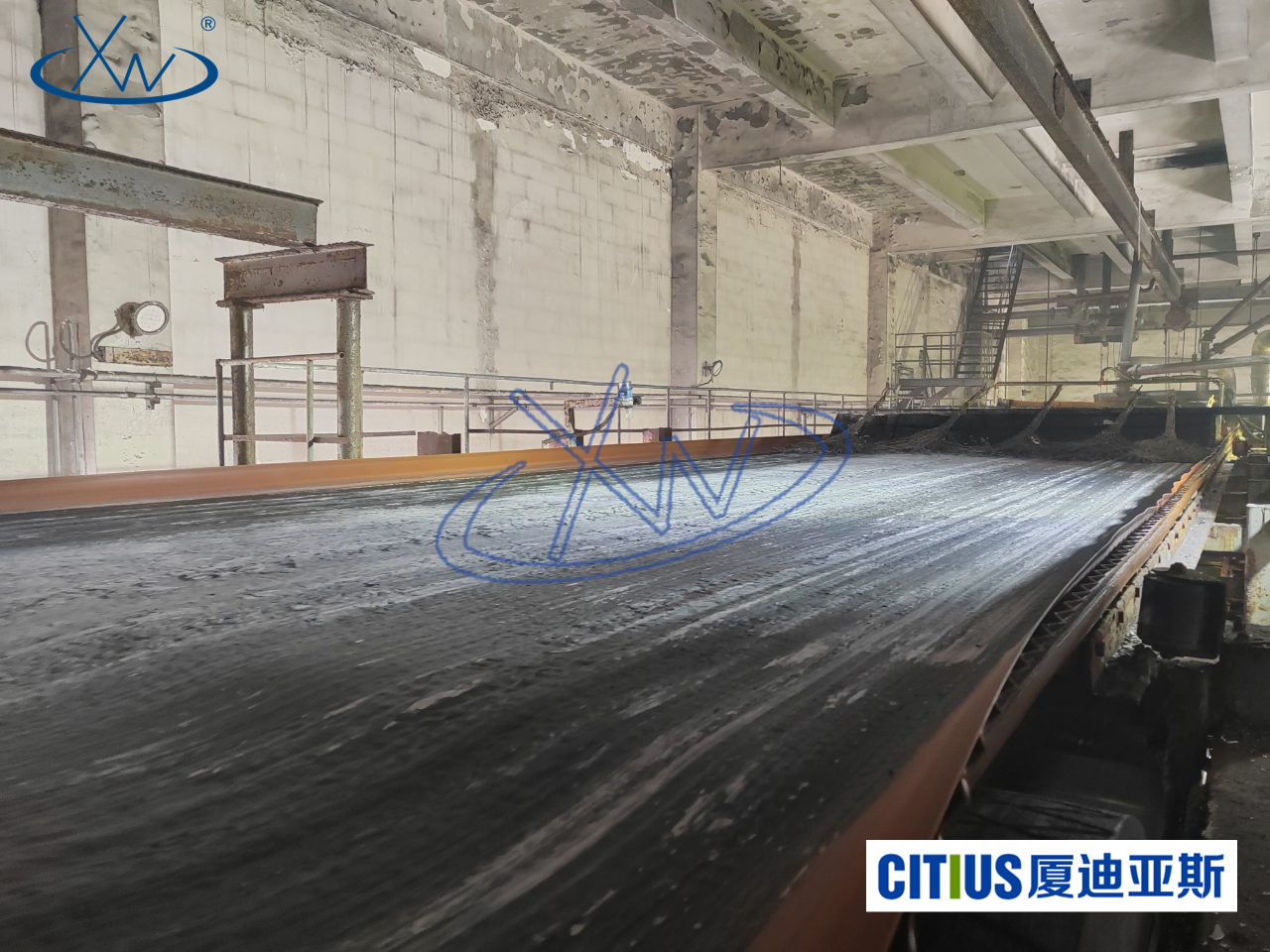
- Slurry Distribution The gypsum slurry at the bottom of the desulfurization tower is pumped by a slurry pump to the filter machine's distribution device, where it is evenly spread onto the moving filter cloth.
- Vacuum Filtration A vacuum chamber is set beneath the filter cloth. As the filter belt moves through the vacuum zone, liquid is drawn out through the filter cloth under negative pressure, forming a preliminarily dewatered gypsum filter cake.
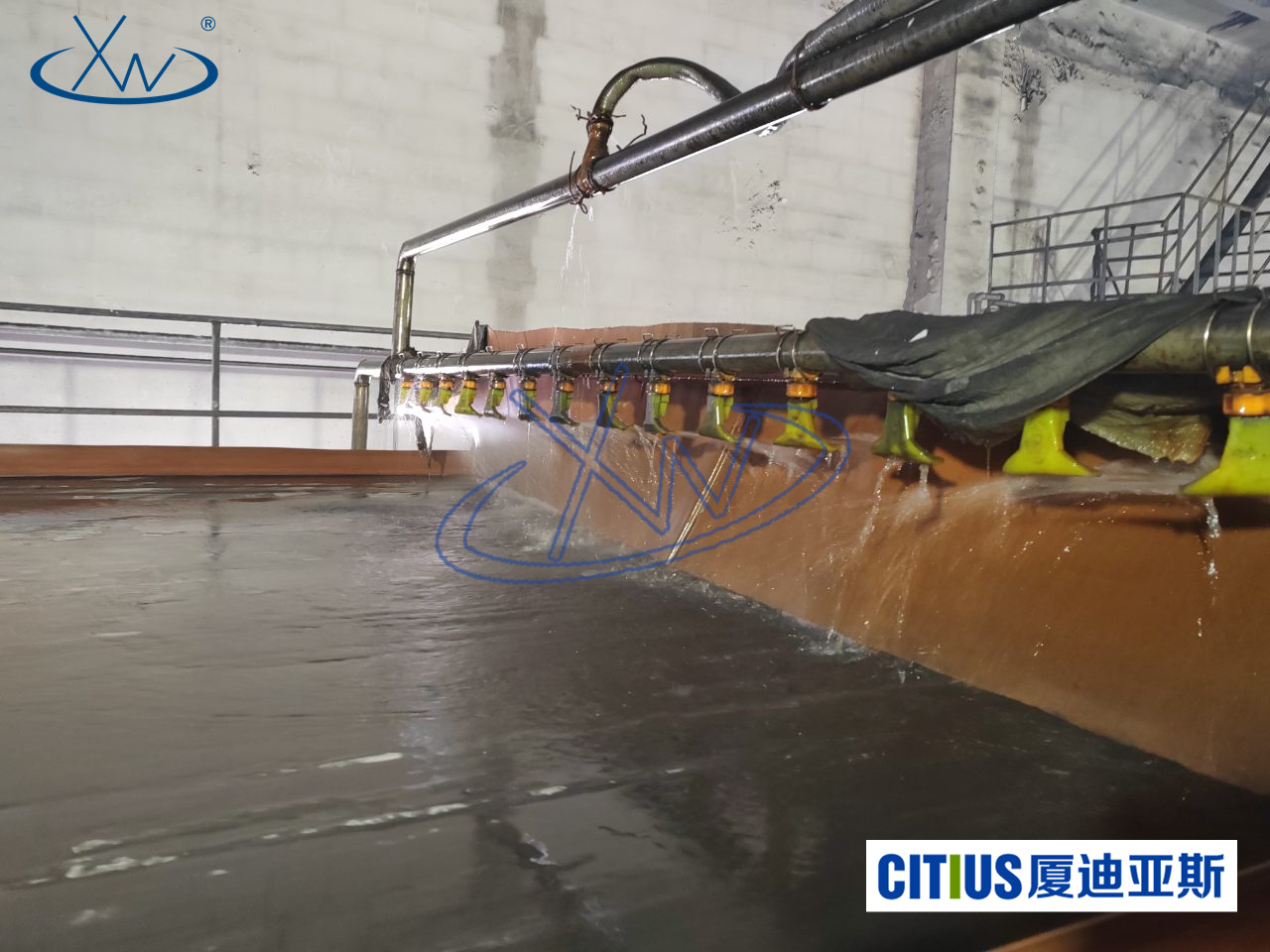
- Filter cake washing : According to process requirements, multiple-stage spray zones can be set up to rinse away residual chloride ions and impurities from the filter cake with clean water, thereby enhancing gypsum purity.
- Further dehydration and material discharge After being dehydrated again in the drying zone, the filter cake's moisture content can be reduced to: 8% ~ 12% The end of the filter belt is equipped with a peeling device for automatic discharge, while the filter cloth is rinsed and then reused in a continuous cycle.
Its main technical advantages include:
- Continuous operation, strong processing capability : Suitable for high-flow, continuous production conditions, the equipment can achieve 24 Hourly operation.
- The filter cake has low moisture content. : Negative-pressure vacuum filtration combined with highly permeable filter cloths ensures thorough dewatering of the filter cake, which facilitates the subsequent stacking, transportation, and utilization of gypsum.
- Good washing performance : The multi-stage countercurrent washing design ensures low impurity content and high purity in the filter cake, meeting the standards for building gypsum or cement admixtures.
- High degree of operational automation : Equipped with an automatic fabric-correcting, tensioning, and cleaning system to minimize manual maintenance.
III. The Critical Role of Filter Cloth in Filtration Systems
The filter cloth is the heart of the entire filtration system. “ Core Medium ” , its performance directly determines the dehydration rate, filter cake quality, and system stability. In thermoelectric gypsum desulfurization, the slurry exhibits Fine particles, high salt content, pH Slightly neutral or weakly alkaline These characteristics, therefore, place extremely stringent demands on filter cloths:
- Excellent breathability and water permeability : Ensuring that vacuum suction is evenly distributed across the entire filtration area, this system enables rapid dewatering while preventing fine particles from penetrating.
- Outstanding chemical corrosion resistance : The desulfurization slurry contains chloride ions, sulfate ions, and other components, posing a long-term challenge to the stability of filter cloths.
- Good peelability and recyclability : The gypsum filter cake is relatively sticky, so it’s essential to ensure the filter cloth surface remains smooth and the cake can be easily peeled off. After cleaning, the filter cloth retains excellent performance, significantly extending its service life.
- High dimensional stability and mechanical strength : It can maintain a stable structure even under prolonged tension, vacuum suction, and high-humidity conditions.
In the application, professional manufacturers like Xiamen Citius, based on the characteristics of desulfurization gypsum, provide Customized Industrial Filter Cloth Solutions , including various fabric structures (plain weave, satin weave, monofilament or multifilament), weaving densities, and surface treatments (such as heat setting, calendering, or coating), all designed to achieve both high efficiency and superior reliability.
IV. Typical Process Parameters and Operational Performance
In actual operation, the process parameters of the horizontal vacuum belt filter can be flexibly adjusted according to the gypsum slurry concentration and the desired dewatering rate:
- Feed concentration :10% ~ 20%
- Vacuum Level : – 0.06 ~- 0.08MPa
- Filter cake thickness :8 ~ 25mm
- Filter cake moisture content :8% ~ 12%
- Washing water ratio :0.5 ~ 1.0:1
- Filter cloth running speed :0.5 ~ 5.0m/min
Operating data show that, when used in conjunction with highly permeable and abrasion-resistant industrial filter cloths, the gypsum slurry can achieve a processing capacity of Filter area per square meter per hour 1.5 ~ 2.0 Ton , the filtrate has high clarity and a solid content below 0.1% , which can meet both the critical requirements of environmentally friendly emissions and gypsum recycling.
V. Conclusion
In the desulfurization process of the thermoelectric industry, horizontal vacuum belt filters have become the mainstream equipment for gypsum dewatering, thanks to their continuous and highly efficient operational characteristics. Meanwhile, selecting and optimizing high-performance industrial filter cloths is crucial for ensuring the system's long-term, stable operation.
From filter cloth weaving techniques to system integration, and from vacuum filtration principles to filter cake quality control, modern filtration technology is continuously enhancing the efficiency of gypsum resource utilization as well as its environmental benefits. As the technology continues to advance and its applications deepen, The combination of industrial filter cloths and horizontal vacuum belt filters , will continue to play an irreplaceable role in the thermoelectric desulfurization field, contributing solid support to clean energy and the circular economy.




Add
No. 16-22 Chunfeng East Road, Xiang'an Torch High tech Zone, Xiamen City, Fujian Province, ChinaAll Rights Reserved. | Privacy Policy |
Tel/ WhatsApp