
-
Filter ClothBelt press filter mesh belt Horizontal belt vacuum filter mesh belt Vertical filter press filter cloth Filter Press Filter Cloth Breathable mesh Technical fabric - drying Technical fabric - high pressure belt Technical fabric - conveyor belt Technical fabric - fiberboard Joint form Edge banding form Accessories (threading)
Search HistoryClear All Records
- All
- Product Management
- News
Reduce costs and improve efficiency: The application of Shadiya filter cloth in wastewater treatment in the dyeing and finishing industry
Release time:
2024-11-13
With the increasing strictness of environmental protection regulations and the rising demands for green manufacturing, the wastewater treatment issues generated during the dyeing and finishing industry have become a focal point of industry concern. The dyes and chemicals used in the dyeing process often pollute large amounts of water sources. Therefore, how to effectively remove pollutants from wastewater, especially suspended solids and dyes, has become an urgent challenge to be solved. To this end, the use of efficient filtration technology, particularly filter cloths for plate and frame filter presses, has become a key solution in wastewater treatment in the dyeing and finishing industry.
Characteristics of wastewater in the dyeing and finishing industry
During the dyeing and finishing process, processes such as dyeing, bleaching, and shaping of raw fabrics generate a large amount of wastewater. This wastewater contains various pollutants, mainly including:
Dyes and chemical additives: These substances have a strong pollution effect on water bodies, especially certain non-degradable dyes that may have long-term impacts on water quality.
Suspended solids: Originating from fabric treatment, sludge, and residual dyes, these affect the clarity of water quality.
High Chemical Oxygen Demand (COD) and Biochemical Oxygen Demand (BOD): Reflecting the concentration of organic pollutants in wastewater, higher COD and BOD can lead to oxygen depletion in water bodies, affecting aquatic ecosystems.
Therefore, the treatment of wastewater in the dyeing and finishing industry not only requires the removal of harmful substances but also needs efficient solid-liquid separation technology to reduce the volume of wastewater treatment and decrease wastewater discharge.
Working principle of plate and frame filter press
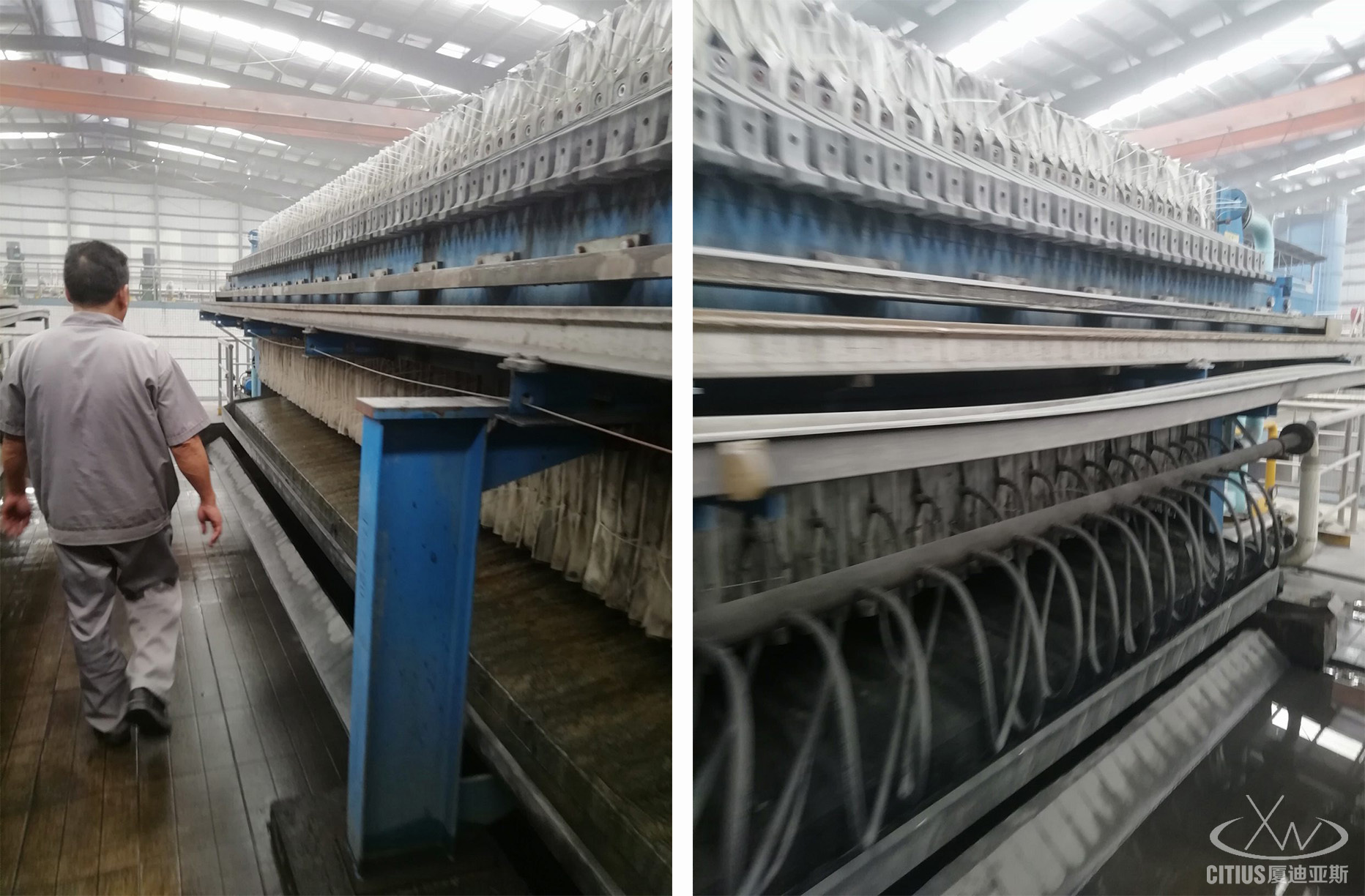
Plate and frame filter pressis an efficient solid-liquid separation device widely used in wastewater treatment across various industries, especially in textiles and chemicals. Its working principle involves applying pressure to squeeze out the liquid portion from the wastewater through filter cloths while solid particles are retained on the surface of the filter cloth, forming a filter cake. As pressure further increases, moisture from the filter cake is squeezed out, achieving dehydration and solid-liquid separation.
In the dyeing and finishing industry, the filter cloths of plate and frame filter presses play a crucial role; they are not only key components for solid-liquid separation but also directly affect filtration effectiveness and efficiency.
Functions of plate and frame filter press filter cloths
Efficient solid-liquid separation:
The filter cloths of plate and frame filter presses effectively retain solid particles and harmful substances such as dyes and suspended solids through their precise pore structure. The liquid components flow out through the pores of the filter cloths, resulting in clear filtered wastewater that meets environmental discharge standards.
Improving dehydration efficiency:
The material, pore size, fiber structure, etc., of the filter cloth determine the efficiency of solid-liquid separation. The filter cloths from Citius use high-strength, corrosion-resistant materials that can effectively improve solid-liquid separation efficiency, accelerate dehydration processes, reduce equipment burden, and shorten filtration cycles.
Reducing wastewater volume:
The filter cloths can significantly reduce moisture content in wastewater, thereby greatly decreasing sludge volume for easier subsequent disposal and transportation while lowering wastewater treatment costs.
Increasing filter cake dryness:
Citius's filter cloths are designed to enhance the dryness of filter cakes, which is crucial for wastewater treatment in the dyeing and finishing industry since drier filter cakes can be more easily subjected to subsequent harmless treatment or recycling.
Characteristics of Citius's plate and frame filter press filter cloths
As a leading brand in industrial filter cloths, Xiamen Citius Filtration Material Technology Co., Ltd. focuses on providing efficient filter cloth solutions for the dyeing and finishing industry. Its plate and frame filter press filter cloths have the following characteristics:
High temperature resistance and chemical corrosion resistance:
The chemicals and dyes in dyeing wastewater often have strong corrosive properties; therefore, the filter cloth needs to possess high corrosion resistance. Citius's filter cloths use special fiber materials that can withstand corrosion from dyes and chemical additives to ensure stable operation over long periods.
High strength and wear resistance:
Wastewater treatment in the dyeing industry often needs to be conducted under high-pressure conditions. Citius's filter cloths have high strength and good wear resistance that make them durable under long-term high-pressure working environments, extending their service life.
Excellent cleaning performance:
Dyeing wastewater contains a large amount of dyes, chemicals, and suspended solids that can easily clog the pores of filter cloths. Citius's filter cloth design features excellent cleaning performance that effectively removes dirt, reduces maintenance frequency and costs for the cloths while enhancing equipment work efficiency.
Optimized pore size design:
The pore sizes of Citius's filter cloths are customized according to actual customer needs to efficiently filter solid particles of different sizes while ensuring effective removal of dyes and other harmful substances from wastewater.
Application effects of Citius's filter cloths in the dyeing industry
Citius's plate and frame filter press filter cloths have achieved significant results in applications within the dyeing industry. By using Citius's filter cloths, dyeing enterprises can achieve more efficient wastewater treatment by removing suspended solids and dyes from wastewater while ensuring that water quality meets discharge standards. The dryness of the filter cake has significantly improved, reducing subsequent processing costs while optimizing wastewater disposal processes.
Many dyeing enterprises have adopted Citius's industrial filter cloths with positive feedback. Through these high-performance filters, companies can lower their wastewater treatment costs while reducing environmental pollution while enhancing overall production efficiency in line with green environmental development trends.
Conclusion
With increasing environmental protection requirements and gradual promotion of green manufacturing, there is an urgent demand for wastewater treatment in the dyeing industry. By adopting efficient plate and frame filter press filter cloths, dyeing enterprises can effectively separate solid materials from wastewater, remove harmful dyes, reduce wastewater discharge, achieve resource recovery processing that meets environmental protection requirements. Xiamen Citius will continue to provide innovative filtration solutions for the dyeing industry as a leading manufacturer of industrial filter cloths to help enterprises achieve sustainable development goals towards a greener and more efficient future.



Previous article:

Add
No. 16-22 Chunfeng East Road, Xiang'an Torch High tech Zone, Xiamen City, Fujian Province, ChinaAll Rights Reserved. | Privacy Policy |
Tel/ WhatsApp