
-
Filter ClothBelt press filter mesh belt Horizontal belt vacuum filter mesh belt Vertical filter press filter cloth Filter Press Filter Cloth Breathable mesh Technical fabric - drying Technical fabric - high pressure belt Technical fabric - conveyor belt Technical fabric - fiberboard Joint form Edge banding form Accessories (threading)
Search HistoryClear All Records
- All
- Product Management
- News
Industrial filter cloth, applications of filter nets, filter presses, iron phosphate
Share to
Detailed Description
Industrial filter cloth, applications of filter nets, filter presses, iron phosphate
Filter machine type: Pressure filter
Application Industry: Lithium Iron Phosphate
Handling Material Description: Iron Phosphate


In the industrial chain of new energy materials, Iron phosphate FePO ₄ ) It has become a crucial link connecting upstream phosphate mines with downstream lithium-ion battery cathode materials. As iron phosphate batteries rapidly expand into fields such as new-energy vehicles and energy-storage systems, the iron phosphate industry is undergoing a transformation from “ Chemicals ” Towards “ Strategic Materials ” The transformation. And within this value-intensive production chain, Solid-liquid separation technology —— Especially the industrial filter cloths and filtration mesh systems used in the pressing and filtering process. , is playing a decisive role.
I. From Slurry to Solid: The Filtration Process “ Precision craftsmanship ”
The preparation of iron phosphate typically uses phosphoric acid and an iron salt (such as ferrous sulfate or ferric chloride) as raw materials, which react to form a precipitate slurry. After washing, filtering, and drying the slurry, a solid product is obtained. FePO ₄ The powder is then subjected to high-temperature calcination to produce lithium iron phosphate cathode material.
In this process, Filter Press Filtration Stage The goal is not only to separate solids from liquids but also to ensure particle purity, washing efficiency, and minimize the moisture content in the filter cake. Traditional processes often encounter issues such as high residual liquid in the filter cake, incomplete washing, and frequent clogging of filter cloths—problems that directly impact product purity and energy consumption levels.
And Industrial filter cloth It is precisely the core medium that enables efficient filtration. The structure of the filter cloth, its pore size distribution, and surface treatment methods determine the fluid dynamics characteristics of the slurry during the filtration process—and directly influence both the rate and quality of solid-liquid separation.
II. The Technical Logic of Filter Press Filter Cloth
Commonly used equipment in lithium iron phosphate production includes plate-and-frame filters, diaphragm filters, belt filters, and more—each type of equipment corresponds to a specific kind of filter cloth.
For example:
- Plate-and-frame filter press filter cloth Requirements include excellent acid and alkali resistance, dimensional stability, and filter cake release performance.
- Belt Filter Press Filter Belt It places greater emphasis on breathability and mechanical strength, ensuring stable continuous operation.
High-quality filter cloth needs to balance three dimensions in terms of performance:
- High-efficiency separation : The filter cloth features a uniform pore size distribution, enabling it to quickly trap even the finest particles. FePO ₄ Particles to prevent leakage.
- Chemical corrosion resistance : In the presence of highly acidic media, filter cloth materials must maintain long-term structural stability.
- Regenerative Cleanability : The filter cloth retains its original air permeability and filtration performance even after multiple filtration cycles, helping to reduce operational costs.
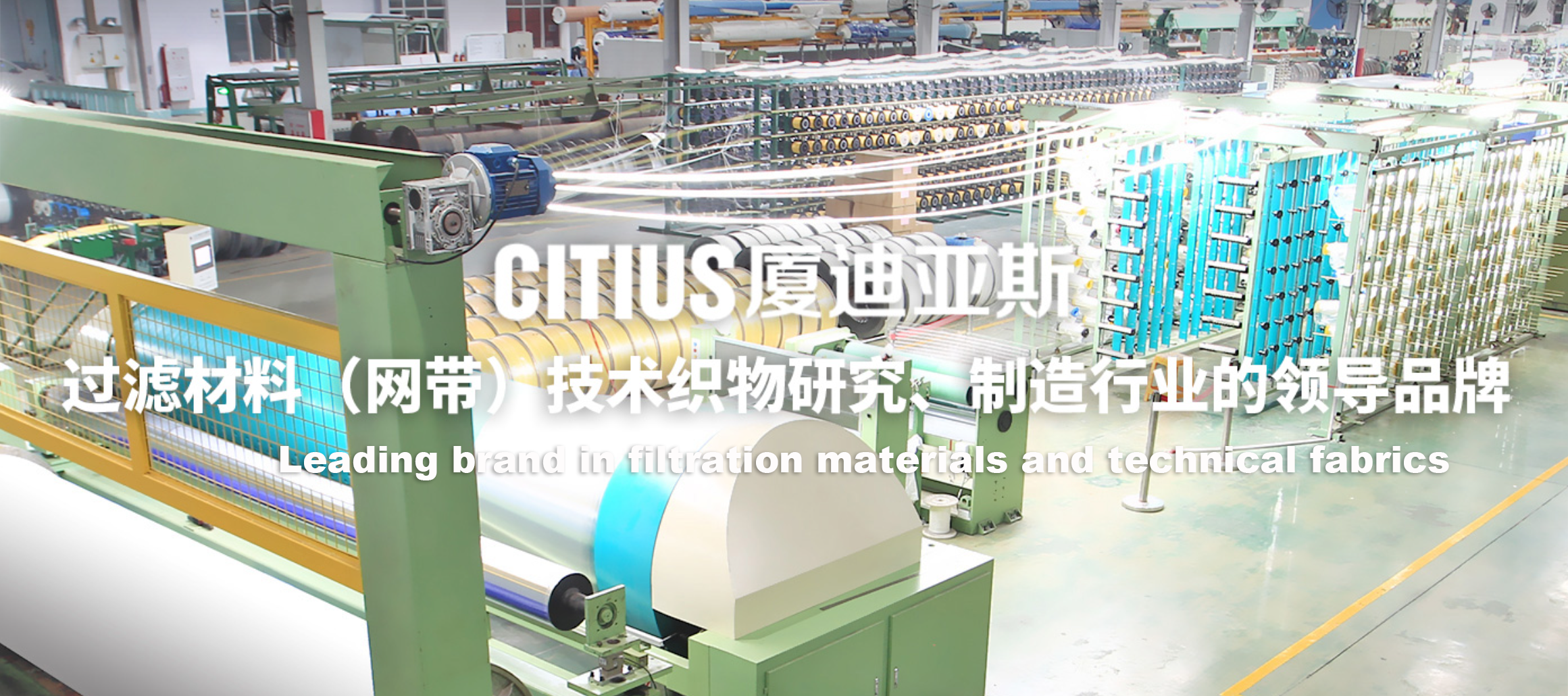
In this field, leading domestic companies such as Xiamen Citiuss Filtration Materials Technology Co., Ltd. Xiamen Citius Filter Media Technology Co., Ltd. ) With three decades of experience in filtering fabric research and development, it has become The drafting unit of the industry standard for belt filter belts Its industrial filter cloth products are widely used in fields such as iron phosphate, alumina, coal washing, and nickel-cobalt-lithium applications, providing numerous enterprises with stable and reliable solid-liquid separation solutions.
3. The Resonant Relationship Between Filtration Precision and Product Purity
For the iron phosphate industry, “ Purity ” Determines the downstream compatibility and electrochemical performance of the material.
Unfiltered slurry is prone to leaving behind impurities, excess sulfate ions, or chloride ions in the filter cake, which can subsequently lead to crystal-phase deviations or uneven conductivity during the calcination stage.
High-performance filter cloths, through precise control of pore size distribution and surface treatment, can achieve particle-size-level分级 filtration, enabling FePO ₄ The particle distribution is more concentrated; meanwhile, combined with Pressure Filtration and Washing Cycle , which can effectively remove soluble impurity ions and significantly enhance material purity.
In applications at several leading enterprises, adopting the optimized filter cloth structure has shortened the slurry filtration cycle by approximately 20% , the moisture content of the filter cake decreases 3~5% , while the product purity has been increased to 99.9% That's all.
This means —— Industrial filter cloth is not only “ Consumables ” , and it further determines the product's performance. “ Invisible Process Parameters ”。
IV. From Devices to Systems: The Industry Value of Filtration Solutions
Today's filtration technology is no longer a competition limited to individual devices—it has evolved into a battle of systematic, end-to-end solutions.
Proposed by Citiuss “ Filtering material + Filter Press System Integration ” Our philosophy is to provide customers with a complete solid-liquid separation and washing system by optimizing the matching of filter cloths, equipment, and operational parameters.
For example, in the lithium iron phosphate production line, using Citiuss' custom-designed filter cloths combined with filtration machines can deliver the following comprehensive benefits:
- Improved clarity of the filtrate 30% The above
- Washing water usage reduced 20%
- Filter cloth service life extended 1.5 Twice
- System energy consumption decreases 10~15%
These improvements are not only about optimizing equipment performance—they also reflect a company's competitiveness in green manufacturing.
VI. Conclusion: From Filtration Media to Materials Strategy
High-quality development of the iron phosphate industry relies heavily on the technological support provided by filtration and separation processes. Industrial filter cloths, though seemingly ordinary, “ Fabric ” In fact, it is a critical component that supports precision manufacturing processes, influencing product purity, production efficiency, and even the carbon footprint of the entire factory.
In the future's new materials industry system, Filtering technology is moving from behind the scenes to the forefront. 。
From coal washing to lithium batteries, from alumina to iron phosphate, companies like Xiamen Citius are leveraging more efficient and smarter filtration solutions to inject sustained momentum into green manufacturing—while also enabling “ Industrial filter cloth ” This traditional product has been infused with a new technological brilliance.
Add
No. 16-22 Chunfeng East Road, Xiang'an Torch High tech Zone, Xiamen City, Fujian Province, ChinaAll Rights Reserved. | Privacy Policy |
Tel/ WhatsApp